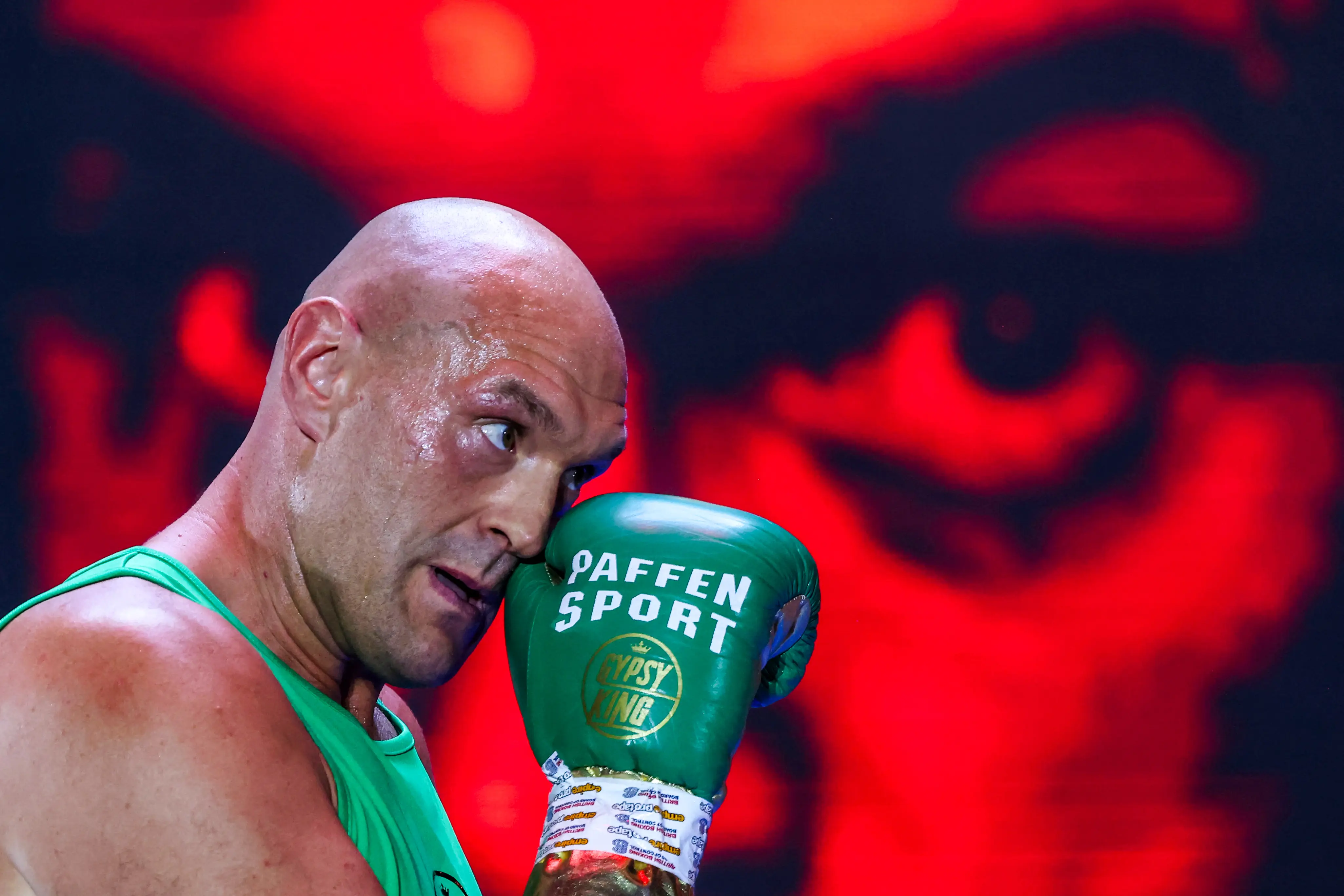
Tyson Fury has said he was diagnosed with schizophrenia soon after his world title win over Wladimir Klitschko in 2015.
"Words can't explain the darkness I was in," the heavyweight boxer said.
"It was like a living version of the pits of hell.
"I thought I would end up in a padded room with the door locked, and that scared me so much.
"The anxiety was crippling me. I just could not overcome it and that's when I went and saw the psychiatrist down in London."
Fury made the revelations about his mental health in a documentary which will be released by Netflix on Friday.
The 38-year-old is preparing for the long-awaited all-British heavyweight fight against Anthony Joshua, a fellow former world champion, in Cardiff on December 11 — a bout that will be broadcast live on Netflix.
Fury recalled hearing the radio talking to him, and begging wife, Paris, to get him out of the hospital because "the Illuminati" wanted him.
Following his victory over Klitschko, Fury gained weight and struggled with alcohol and drug addiction.
"It got that bad I was hearing voices in my mind," he said.
"I wouldn't be able to sit and have a conversation because I'd be hearing stuff in my mind.
"I didn't know where to turn, and no-one knew what to do.
"I really needed help, or check into rehab or something.
"I never got a break from it for years. I wanted to be what I thought was normal again."
After Fury was released from hospital, a diagnosis of schizophrenia and bipolar disorder was confirmed.
He said a turning point in his life came when he was on a night out for Halloween in 2017.
"I looked around and could see all the young people and I thought, 'I had the world in my hands and I threw it all away, and now I'm a fat mess addicted to alcohol'," he said.
But Fury said he channelled his disgust into a comeback, which led him to return to training, focus more on his family and claim another world title when he beat Deontay Wilder in 2020. — AFP