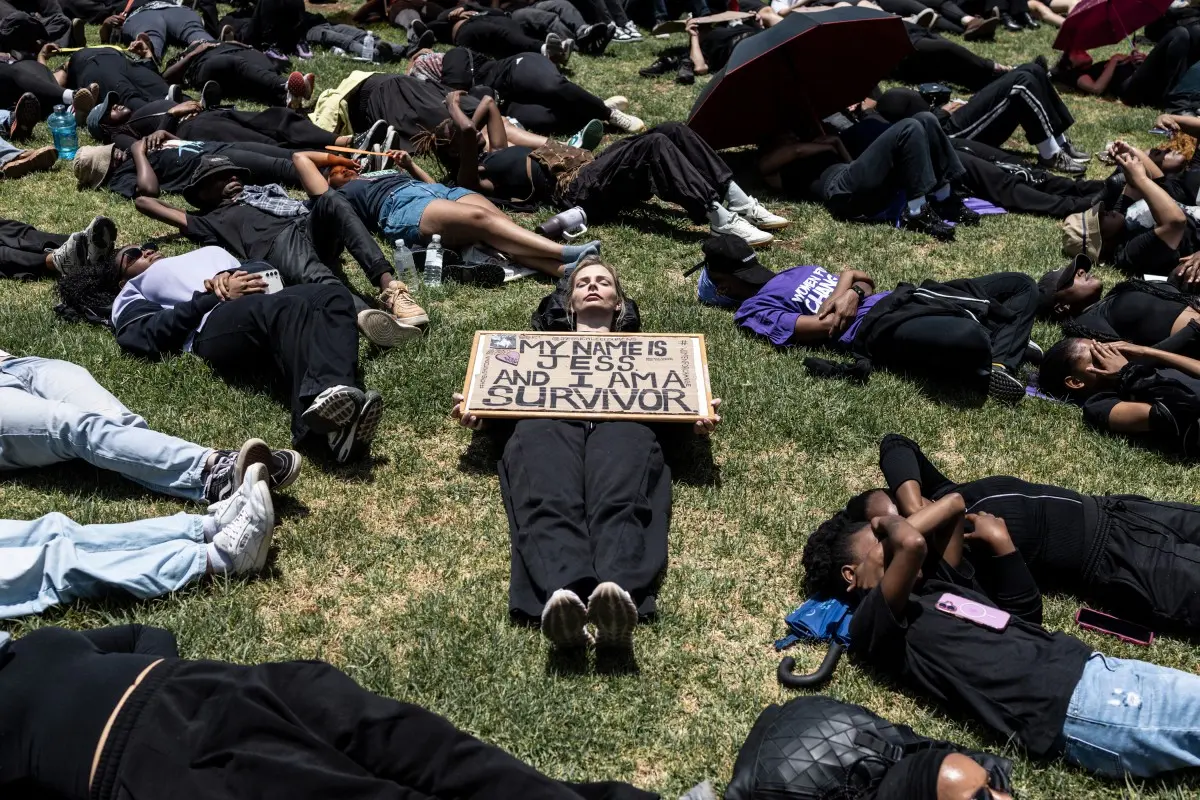
November 25 marked the start of the 16 days of activism against gender-based violence, which runs until the United Nations Human Rights Day on December 10.
SA's 2026 theme, “Letsema: Men, women, boys and girls working together to end gender-based violence and femicide”, is a reminder that ending GBV is not women's work alone. Men and boys must be part of the solution.
The fight against GBV remains one of SA's most pressing social challenges.
Despite government efforts, legislation, policies and numerous public campaigns aimed at protecting women and children, cases of GBV and femicide remained high.
The recent discovery of the bodies of several women in and around Kempton Park and other parts of Ekurhuleni has once again exposed the devastating reality of violence against women.
These killings are not isolated from the broader national crisis; they reflect the urgent need to strengthen how society understands, prevents and responds to GBV.
The University of Fort Hare community has also experienced the painful effects of this crisis.
In 2021, the brutal murder of law student Nosicelo Mtebeni shocked the university and the country.
This incident, together with the recent killings in Kempton Park, remind us that GBV affects women across different communities, backgrounds and institutions.
It is a social problem that requires more than condemnation after lives have been lost.
While law enforcement, legislation and victim-support services remain essential, an important question deserves greater attention — why does GBV continue despite these efforts?
My research finds that little attention is given to how culture, beliefs and values, specifically black masculinity ideology, may result in the prevalence of GBV.
This question motivated my Master's research titled “The role of black masculinity ideologies in shaping gender-based violence in the Eastern Cape, South Africa”.
The study explored how black masculinity is understood, learnt and reinforced among Xhosa men, and how certain interpretations of manhood may influence gender relations and contribute to GBV.
Data was collected in three selected communities in the Eastern Cape — Mdantsane, Duncan Village and Ducats, in and around KuGompo City. The study engaged initiated black Xhosa men and relevant community and professional key informants.
My research found that masculinity is commonly associated with being a provider, protector and leader, as well as demonstrating respect, responsibility, strength and discipline. These are positive qualities that can contribute to healthy families and communities.
However, challenges arise when some men misinterpret these roles and teachings as giving them authority and control over women, expecting obedience and treating their decisions as superior.
The study also found that ideas about manhood are learnt from an early age through socialisation within families, among peers and in communities, as well as through traditional practices such as ulwaluko and influences such as social media.
When these messages reinforce male dominance and unequal power relations, they may indirectly contribute to attitudes and behaviours that sustain GBV.
Importantly, the research does not conclude that Xhosa culture or ulwaluko causes GBV.
Rather, it highlights how certain cultural teachings and expectations may be interpreted differently by individuals, and how these interpretations can sometimes reinforce male authority over women.
The concern, therefore, is not culture itself, but the ways in which particular beliefs about masculinity, leadership and respect are understood and practised.
To address these challenges, participants recommended stronger community dialogue, positive masculinity education, continuous mentorship of boys and young men, increased awareness of the law and collaboration among families, traditional leaders, schools, churches, social workers and other community stakeholders.
Most importantly, the findings call for a shift towards preventing GBV before it occurs, rather than concentrating mainly on responding after violence has taken place.
While laws and support services remain essential, early education, positive teachings and community involvement can help challenge harmful beliefs before they translate into violence.
This 16 Days of Activism, the spirit of Letsema calls on all of us to act.
Families can talk openly with boys about respect and equality. Traditional leaders and initiation mentors can explain teachings so that strength is never mistaken for violence.
Schools, churches, social workers and our university community can create spaces where young men question harmful ideas.
The campaign ends on December 10, but the work of raising a new generation of men must continue every day of the year.
Need help? Call the 24-hour GBV Command Centre on 080-0428-428 or send a free “please call me” to *120*7867#. In an emergency, call SAPS on 10111
Peter Tafadzwa Chirimuuta, department of psychology, criminology and social work, University of Fort Hare. Supervised by Prof Pius Tanga