

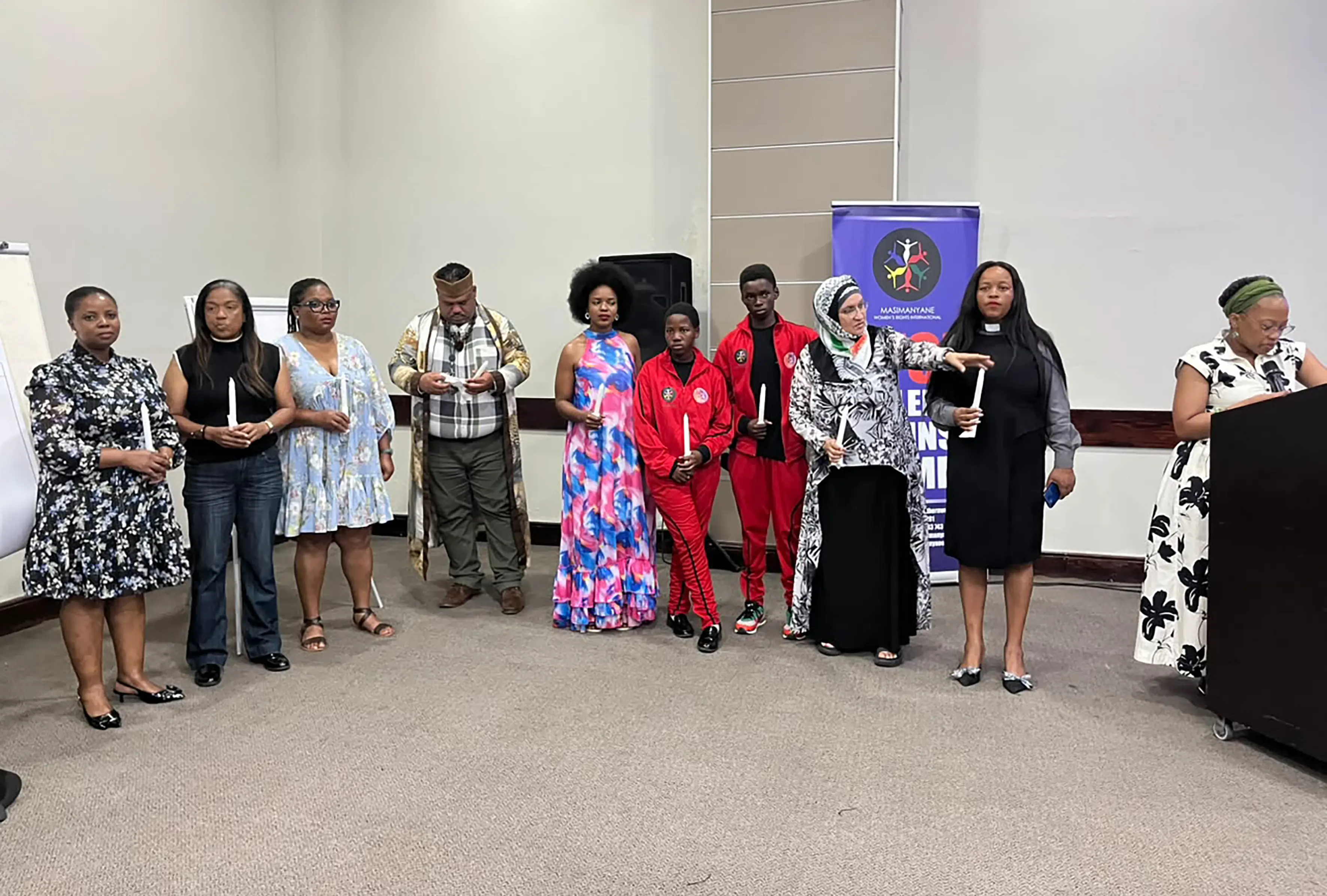
Despite repeated marches, public campaigns and calls for action against gender-based violence (GBV), little has changed in the fight to protect women and girls, with poor implementation and a lack of co-ordinated action continuing to undermine efforts to tackle the crisis.
This concern was raised by Masimanyane Women’s Rights International board chair Nalianee Naidoo during the organisation’s Red Card to Femicide awareness campaign, held in KuGompo City on Thursday as part of the 16 Days of Activism for No Violence Against Women and Children.
“This has been a problem in terms of gender-based violence because if you remember a few years ago in 2018, we had a total shutdown campaign,” Naidoo said.
“That was a national campaign where [women] said enough is enough and they drew attention on social media platforms to combat gender-based violence and, more importantly, to give women a voice to be heard.”
However, the country continued to struggle to translate public pressure and constitutional protections into meaningful change.
“The biggest problem we have is implementation; there is no holistic approach to gender-based violence.”
Naidoo said a collective, whole-of-society response was needed, involving government departments, communities, institutions and religious organisations, rather than leaving the responsibility to the police, justice system and civil society.
“We need a much more consolidated, collective input not only from the government, not only the justice, but [from] community individuals, institutions and religious organisations.
“That's the only way we're going to be able to deal with gender-based violence.”
Naidoo identified patriarchy and entrenched cultural attitudes as major obstacles, saying efforts to end violence against women had to include changing how boys and men viewed and treated females.
“Another huge problem in our society in SA is patriarchy. And it stems from the apartheid system isolating women and the rights of women,” she said.
Though the constitution protected women's rights to dignity, equality, freedom and security, and life, Naidoo said these guarantees meant little if they were not implemented.
“The implementation becomes a problem, and government needs to look at more innovative ways of how they can harness the skills; it's not only civil society that has a responsibility.
"It's a whole society that needs to be involved.”
Schools also had a role to play in challenging harmful attitudes in children from an early age.
“Cultural issues also play huge roles in terms of gender-based violence. We need to start changing mindsets.
"So even children at schools need to be given information about their attitude towards girls and how they deal with issues.”
Naidoo said the failure to bring about sustained change was one of the reasons GBV figures remained stubbornly high.
She urged people not to remain silent when they witnessed violence against women.
“One of the major things about femicide, when you see it, do not remain silent.”
The Red Card to Femicide campaign aims to remember people who have died as a result of gender-based violence and bring communities together to identify risks and discuss ways to prevent femicide.
“The campaign is very important as it links femicide to community prevention,” Masimanyane founder Dr Leslie Ann Foster said.
The organisation uses soccer, including its women's training and soccer league, to bring communities together and create opportunities to share information about the risk factors that can lead to femicide.
Foster said the programme also provided a platform to discuss prevention strategies, including creating safe spaces for women.
She said the 16 Days of Activism campaign was an opportunity to help communities recognise different forms of violence and understand the warning signs.
“Our contribution to the 16 days is to give better understanding and make young people aware and to be able to identify risk factors,” she said.
The red card symbolised the removal of perpetrators from the game, drawing on the soccer rule that a player shown a red card is sent off for serious misconduct.
The campaign also seeks to identify harmful practices and attitudes in communities that can contribute to femicide.
The event brought together stakeholders from the SAPS, the departments of social development, health and justice, as well as community members.
Sergeant Buyiswa Bomela Gomana said the police had established gender-based violence desks to assist victims and ensure their cases were handled appropriately.
She said officers had a responsibility to ensure there were no gaps when victims reported abuse at police stations.
The desks also provide access to counselling, with Masimanyane assisting through the provision of social workers.
Gomana said police opened cases against alleged perpetrators and worked to ensure they were held accountable.
Daily Dispatch