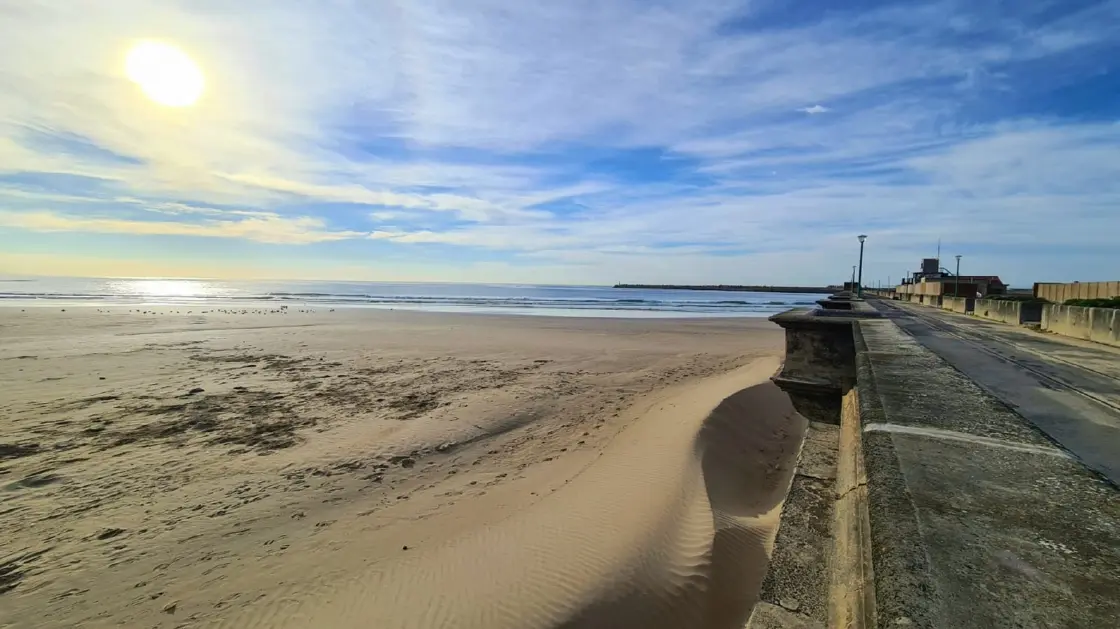
“Restrictions are determined by the safety conditions at each beach, and do not automatically apply to all beaches within the metro.
"What we have done is to ask people to exercise caution at all our beaches,” Buku said.
The assessment by East London Museum principal scientist Kevin Cole, drawing on input and consensus from shark researchers Dr Geremy Cliff and Dr Matt Dicken, found that the nature and distribution of Lochrenberg’s wounds were consistent with an attack by a great white shark.
Cole said the swimmer had sustained wounds to her right shoulder and arm, right thigh and upper right leg.
“In the case of the tragic attack on open water swimmer Janine Lochrenberg at Orient Beach, an interpretation of the wound morphology revealed multiple bites.
“Wounds to the right upper body [shoulder and arm], right thigh and upper right leg.
"A roughly curved or crescent outline was also noticeable where the jaw closed around the thigh area.
"Lacerations and finer grooves indicative of the serrated triangular teeth of a great white were also observed,” he said.
Cole said the pattern of the wounds supported the assessment that a great white was responsible.
“Interdental gaps and flesh flaps are larger in victims of a great white as compared to the other mentioned species and this was evident in the wound morphology.
"Dr Dicken estimates the length of the shark involved to be greater than 3.5m.
“Seven great white sharks were observed from the air in Chintsa Bay two days before the attack at Orient Beach,” Cole said.
Cole and his colleagues said three shark species were most frequently implicated in attacks on people: great whites, bull sharks and tiger sharks.
However, they said the conditions at the time of the attack made it less likely that it was a bull or tiger shark.
They noted that the ocean temperature was relatively cold at 15°C and the water was clear.
“This would rule out the possibility of a bull shark [also based on the fact that there is only one record of this species involved here in a non-fatal incident, in 2006].
“Tiger sharks also prefer warmer waters, being mostly a summer visitor to KuGompo City and there is no record of a fatal attack by the species in this region.
“Great white sharks, however, have been recorded in many sightings and a previous record of a fatal incident on a surfer at Nahoon Reef, 7km away from Orient Beach,” the researchers said.
They offered their condolences to Lochrenberg’s family and friends.
Buku said lifeguards had been monitoring the beaches since the incident, with no further shark sightings reported by lifeguards or members of the public.
With the festive season approaching, the municipality plans to strengthen beach safety measures, including appointing 35 additional seasonal lifeguards to supplement its permanent staff.
“Lifeguards will regularly scan the water and communicate any unusual shark sightings or potential risks.
"We ask that people swim in the areas that are advised by our lifeguards,” Buku said.
Other planned measures include displaying warning flags and signage when a shark risk is identified, installing multilingual shark-awareness signs and strengthening public education among beach users.
The municipality will also use its official social media platforms to communicate verified shark sightings and temporary beach closures.
Buku said lifeguard operating hours would be extended during the festive season, from 7am to 6pm daily, with services running until 8pm on peak days.
Beachgoers have been urged to swim only during designated lifeguard operating hours and in areas monitored by lifeguards.
“Swimming outside these hours is discouraged as lifeguard supervision and emergency assistance may not be available,” he said.
Buku reiterated that the municipality was working towards reopening the affected beaches on Friday, subject to safety assessments, and urged residents and visitors to follow instructions from lifeguards and heed warnings while using the metro’s beaches.