


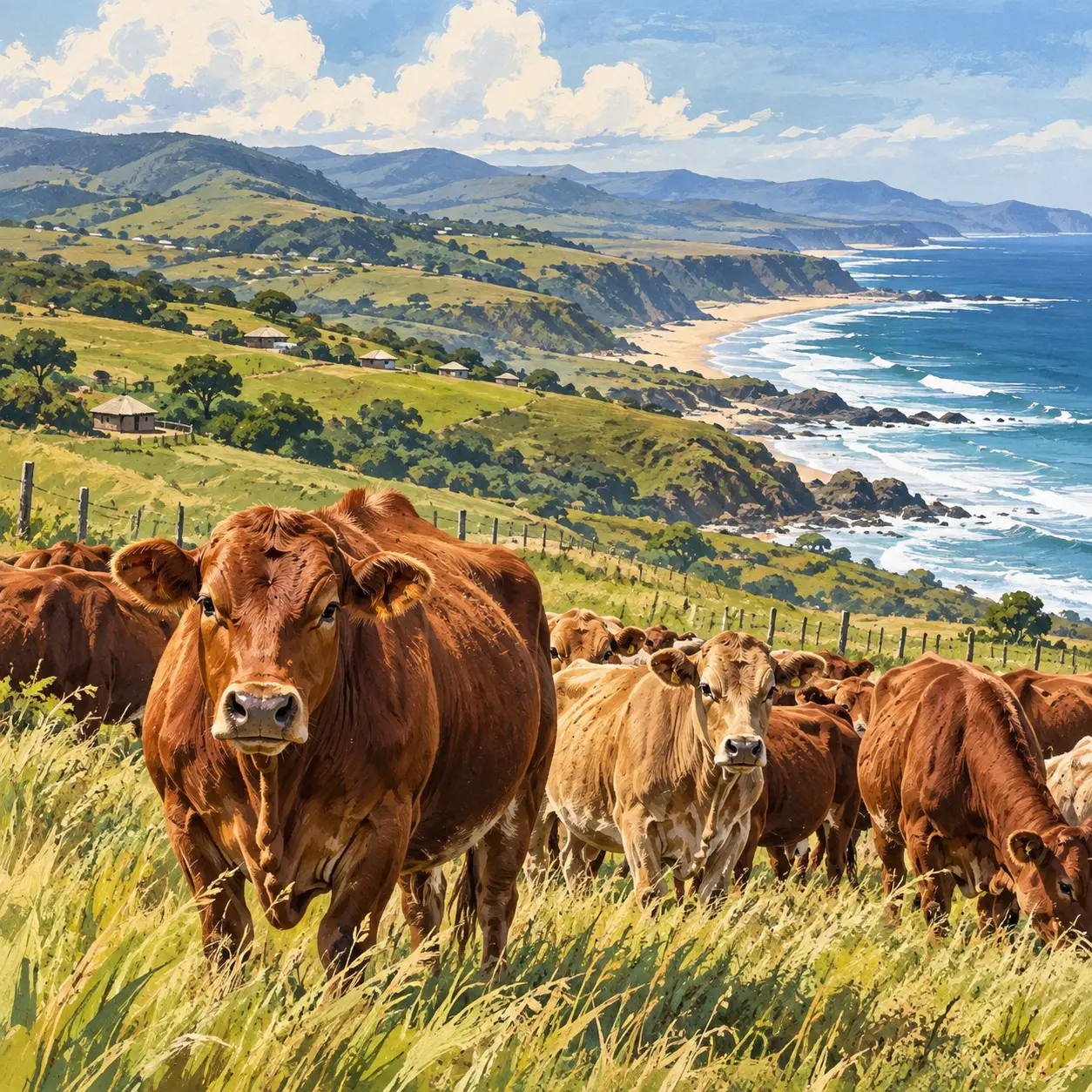
Areas such as Lusikisiki along the Wild Coast, with its world-renowned Magwa Falls, scenic beaches and rolling mountains, need to be assisted to realise their full tourism potential to help grow the economy of rural communities.
The call was made by OR Tambo District Municipality mayor Mesuli Ngqondwana who visited Lusikisiki in the Ingquza Hill Local Municipality to donate a herd of 60 breeding heifers to a rural farming co-operative.
The Lambasi Cutwini Cattle Breeding Project in Lambasi in Lusikisiki was established by rural farmers on 4,000ha of grazing land.
The handover formed part of an investment of about R3.4m made by the OR Tambo District Municipality to ensure the project transformed into a viable agricultural enterprise.
According to the district council, the project originated through the Rural Agricultural Finance Initiative (Rafi), involving rural district municipalities in the Eastern Cape.
“The original concept envisaged a co-operative-owned Wagyu cattle breeding farm,” district municipal spokesperson Ncebakazi Kolwane said this week.
“When the Rafi initiative was discontinued due to funding constraints, the OR Tambo District Municipality resolved to continue supporting the project and adapted the original model to enable implementation without the external stakeholders and the Wagyu breed.
"The municipality subsequently purchased 60 heifers from Ntinga for donation to the co-operative, creating a foundation herd for the cattle breeding enterprise.”
To date, the district authority had invested R3.4m, which included an amount of R2m towards erecting a modern boundary fencing covering about 4,000ha, R800,000 towards horses, feed, a vaccine fridge, medication, personal protective equipment for rangers, dipping facilities, gates and water tanks, and R600,000 towards the purchase of 60 heifers.
Meanwhile, Ngqondwana, who officiated at the handing over of the cattle in Lambasi on Wednesday, promised to ensure a structure with 10 to 12 rooms would be built to assist the project members.
The district municipality would also help the co-operative in crafting a master plan to help attract investors to invest in the development of the area.
“We cannot just come here and leave 60 cows.
"We need to be progressive in nature,” he said.
“When you look at the cows, the project, the beauty of this land, beaches, landscape and everything, there is more reason why people should be coming here.
"The problem is they do not leave a cent behind because there is not even a shop where they can buy food.
"They do not sleep over because there are no buildings to ensure they sleep here.
"But if you do not have anything here, that means cars with tourists will keep coming here, look around and then drive off.”
The mayor said to give meaning to what they were trying to do, it was important that the government invested money in areas such as Lambasi.
“In reality, the district municipality does not have a lot of money but council will have to invest money here to build structures to accommodate people.
"Once that works, businesspeople will come to invest. That is how we can grow the economy of this place.”
He said, at present, tourism in the district was contributing little to the economy.
As such, the district authority would have to step in and assist the community of Lambasi, who were also members of the Cutwini Cattle Breeding Project, with crafting a business plan,
The business plan would then be used to source further funding for the project and development of the area.
“We cannot just watch all this beauty around us and fold our arms as government.”
Ngqondwana said the strides made by the project members was proof that they had the potential to do so much more to develop Lambasi.
He said the two Beefmaster bulls also handed over to the project would help improve genetics among heifers.
The breeding programme was designed to develop a productive, resilient herd capable of adapting to local conditions, while improving the quality and commercial potential of locally produced beef.
Beefmaster is a medium-weight breed, making it comparatively economical to breed with, while offering fast growth, strong body conformation and good meat-production potential.
The breed is also known for its tolerance to heat and drought and its calm temperament, making it easier to manage.
The 60 heifers were a result of the Ntinga OR Tambo Development Agency’s earlier breeding interventions.
Cutwini Cattle Breeding Project chair Mxolisi Luthuli said getting the project off the ground had been a huge struggle, mainly due to a lack of funding.
Some of the members had also passed away over the years before they could realise their dream.
“Jobs are scarce so we rely on farming and livestock for our livelihoods," Luthuli said.
"I am so happy the cows have finally arrived."