



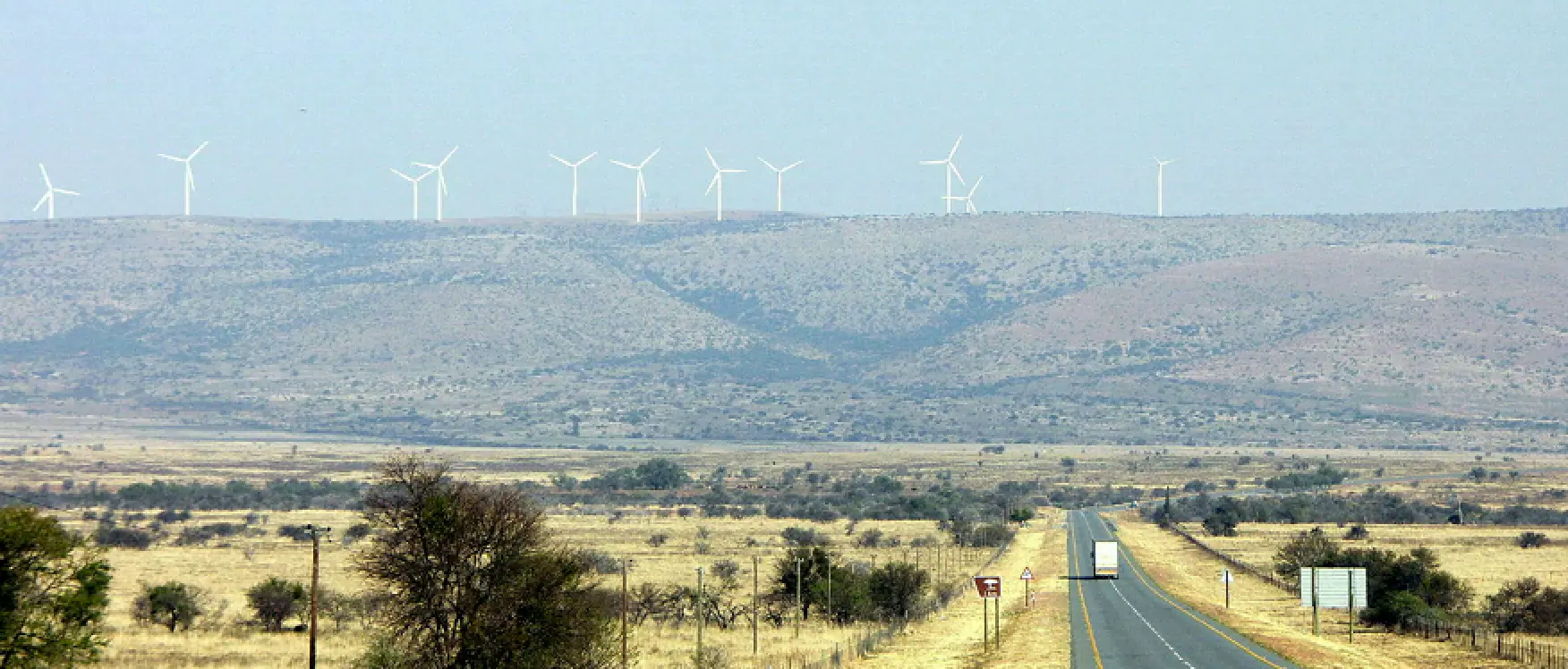
The Cookhouse Wind Farm Community Trust (CWFCT) has announced ambitious plans for a 4ha greenfield development along the N10 corridor, about 7km outside Cookhouse, aimed at driving long-term economic sustainability for local Eastern Cape communities.
The trust, which holds a 25% stake in the Renewables Cookhouse Wind Farm, is establishing the commercial project through its newly formed profit-making subsidiary, CWFCT Holdings.
The initiative seeks to diversify revenue streams and secure community funding ahead of 2034, when the trust’s initial 20-year Power Purchase Agreement (PPA) with the national grid is set to expire.
Designed in partnership with Mudd Property Developers, the proposed masterplan features three distinct zones — a technical skills & enterprise hub, a hospitality, wellness & retail quarter, and a conferencing, learning & artisan village.
The project is structured to directly benefit residents across four key Eastern Cape towns — Adelaide, Bedford, Cookhouse and KwaNojoli (Somerset East).
Addressing potential regulatory concerns regarding a nonprofit entity managing a commercial enterprise, CWFCT chair Fezeka Mkile told the Dispatch on the sidelines of the announcement at the East London ICC on Thursday that strict governance safeguards had been established to align with legal and auditor guidelines.
“We have already done research and we have requested our auditors to guide us if it is possible for an organisation like us, which is an NPO and a PBO [public benefit organisation] to have a Pty Ltd,” Mkile said.
“That has been confirmed that it is possible.
"The guidelines have been given that whatever profits derived from the Pty Ltd, there can't be any declaration of dividends to any individual, or to any of the directors.
"It purely has to be directed to the socioeconomic development programmes of the trust.”
Highlighting the project's technical rollout, Mudd Property Developers chief executive Carmen Antonie confirmed that initial planning and site approvals were already well under way.
“We've already started with the pre-development stage this year, meaning in terms of all the land use, the permitting, and so on,” Antonie said.
“We anticipate a complete timeline of 23 months, and for construction, 18 months out of that 23 months.
"This is to complete Zone A, Zone B and Zone C.”
Given the greenfield location along the busy N10 highway, Antonie emphasised that the entire multipurpose facility would incorporate sustainable green building practices to operate independently of municipal utility burdens.
“The project is basically completely off-grid, besides having a hybrid solar energy system, so we will be making use of some of the municipal electrical grid.
"Our water will be completely off-grid, sewage system completely off-grid, as well as the waste management system,” Antonie said.
Anthem social performance practitioner Thandaza Theka, representing both the Cookhouse and Nxuba Wind Farms, stressed the urgent need to align the project’s technical training offerings with the real skills demands of the local renewable energy sector.
Anthem is one of the largest independent power producers in SA.
Theka said while the corridor encompassing Adelaide, Bedford, Cookhouse and KwaNojoli hosted six wind farms and three community trusts, local residents remained largely excluded from technical employment due to a severe skills shortage.
He revealed that each wind farm employed an average of 21 technical personnel per site, but roughly 85% of these workers were recruited from outside the region, particularly for specialised millwright roles combining mechanical and electrical engineering.