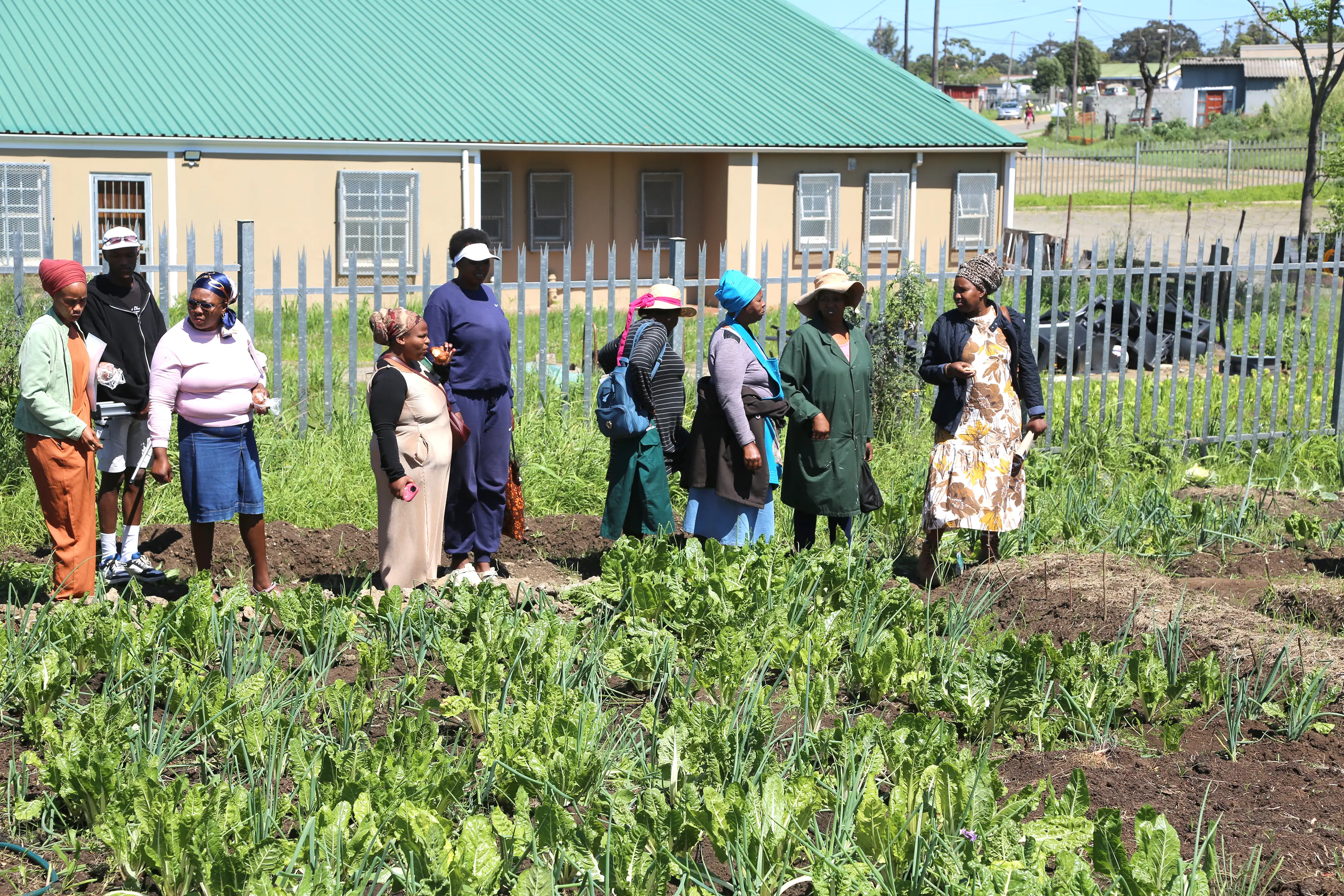
A group of nine women in Greenfields want to turn a school garden and small-scale vegetable production into a sustainable business, with organic certification and access to larger markets among their next goals.
The Sozingca Multi Services Primary Co-op has begun supplying vegetables to the local community, while produce from its garden at Sinomonde Primary School in Greenfields, KuGompo City, is also being used for school meals.
But the nine members have yet to earn an income from the project. Money generated through sales is being reinvested in seedlings and equipment as the group explores opportunities to expand production and develop agroprocessing.
The farmers took another step towards that goal recently when the grassroots support network SA Organic Sector Organisation (SAOSO) put them together with some mentors, the MM Xotyeni Foundation, for training on organic production and certification.
SAOSO chair Bakhusele Mathupha said a main aim of their is helping farmers with the standards required for organic certification and connecting them with the wider community of organic producers.
He said the school garden offered an opportunity to link local food production with local consumption, reducing the need to buy food from outside the community when residents were growing produce themselves.
“We want schools to eat produce from their own soil, grown using local talent,” Mathupha said.
The longer-term vision is for schools to buy produce from nearby farmers whose farming practices meet organic standards.
The Participatory Guarantee System (PGS) is one route through which small-scale producers can demonstrate compliance with agreed organic standards.
It involves participation by farmers and other stakeholders in verifying production practices, with records, farm visits and peer assessments forming part of the process.
Certification does not automatically guarantee a buyer, however.
Producers must also meet individual buyers’ requirements for product quality, volumes, packaging, food safety and delivery.
The Greenfields co-op has spinach, carrots, beetroot, cabbage, spring onions, lettuce, turnips and vegetable seedlings growing.
Members supply local customers -- and they are busy developing agroprocessing activities, including frozen vegetables, fruit juice, jam and vegetable achar.
The group has surveyed the market at Pick n Pay, where it received an indication of potential interest in buying between 30 and 50 bunches of vegetables a day. That opportunity has yet to develop into a confirmed supply arrangement.
MM Xotyeni Foundation founder Babalwa Hopa said she began mentoring the women in February or March after they approached her for help with getting involved in agriculture.
She helped them find people who could guide them in planting and production.
“Today is a second leg because they have proven themselves that they can do it. They have held it together as a group. They are aware of markets that exist around them,” Hopa said.
She described the training as an opportunity to build the farmers’ knowledge and confidence while helping them understand the value of the market for organically produced food.
"This is enlightenment, this is training, this is empowerment and capacitation,” Hopa added, warning about the dangers of pesticides.
Farming without synthetic chemicals does not, by itself, establish that produce is certified organic; farmers must comply with the standards and secure approval before marketing products as certified.
Sozingca co-op chair Edna Malusi said the group was deeply appreciative of the school garden. “We are really grateful. This school gave us a place to work in their garden. I feel humbled and honoured as well about what is happening here today,” she added.
The immediate challenge is to turn the growing and production processes and market opportunities into reliable earnings for the members, while meeting the requirements of any certification system and prospective buyers.
For now though, the garden provides food for school meals, produce for local customers and a base from which the women can build their dream of a larger enterprise.
---
NOTE: SAOSO has an informal arrangement with Woolworths SA through which Woolworths buys PGS-certified products. This is an informal purchasing arrangement though, not a formal, comprehensive partnership or a direct supply contract with every PGS farmer.
It does not mean that all PGS-certified farmers automatically qualify to supply Woolworths -- individual producers still need to establish the applicable purchasing arrangements, product specifications, volumes, food safety requirements, packaging, traceability and delivery conditions.