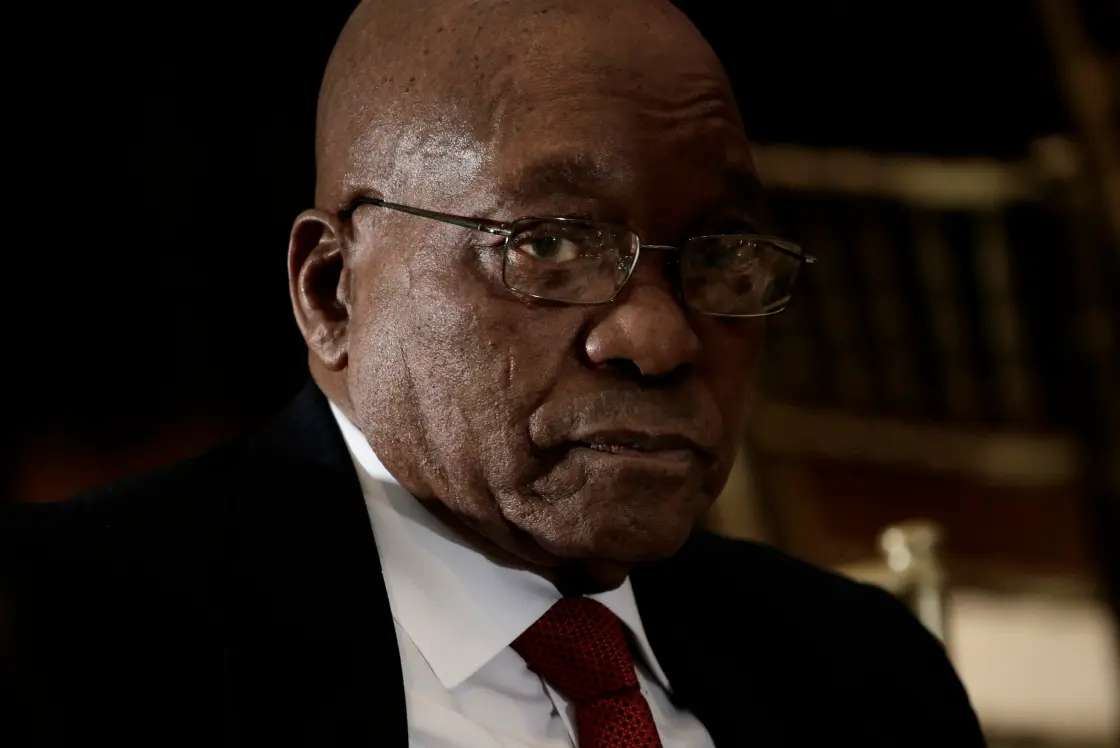
The Daily Dispatch, in conjunction with The Voice Lounge, will this week host a provincial launch of a book by political scientists Prof Mcebisi Ndletyana and Prof Mashupye Maserumule, titled The Zuma Effect.
The book looks into Jacob Zuma's nearly two terms in office as the ANC and the country's president, from May 2009 to February 2018, when he resigned under pressure from the ANC national executive committee, amid mounting corruption and state capture allegations.
The launch will be held at the Guild Theatre on Wednesday, with proceedings expected to start at 5.30pm.
While both the authors will be in town, the panel will be joined by Eastern Cape Provincial Arts and Culture Council's CEO Monde Nkasawe, who, too, is a published author of various novels and poetry books.
Azola "Miss Vee" Vanda, a broadcast journalist and The Voice Lounge's breakfast show host, will moderate proceedings on the day.
This event will dive deep into the full story of how Zuma, through plots, proxies and power plays, transformed the ANC from a party of principle to one of rent-seeking.
The 544-page book analyses his nine-year presidency and how it reshaped South African politics.
According to the book's publishers, Jonathan Ball Publishers, the latest offering from Ndletyana and Maserumule outlines the internal split between ANC "looters" and "constitutionalists", detailing how Zuma's faction in the ANC consolidated power through suspensions, side-linings, public slurs, manipulation of law enforcement, such as disbanding the Scorpions and influencing of the National Prosecuting Authority, and patronage.
The authors trace how Zuma converted the ANC from a party driven by principle into a vehicle for rent-seeking and internal patronage.
Examining his personality and ethnic background, the legacy of exile and the intricacies of inter-ANC rivaries, The Zuma Effect shows why populism and ethnic mobilisation are so powerful and dangerous at the same time.
With Zuma’s ascendancy into power, the authors argue, the split within the ANC was no longer about ideology — it was between the looters and the constitutionalists.
In the book, they argue that Zuma effectively utilised his Zulu identity and ethnic sensitivities to build a loyal political base, particularly in KwaZulu-Natal, positioning opposition to himself as opposition to Zulus.
The text draws on more than 50 interviews with key insiders and political actors to reconstruct the turning points of the Zuma era, the so-called nine wasted years.
Ndetyana is a political science professor at the University of Johannesburg, while Maserumule is an executive dean at the Tshwane University of Technology.