

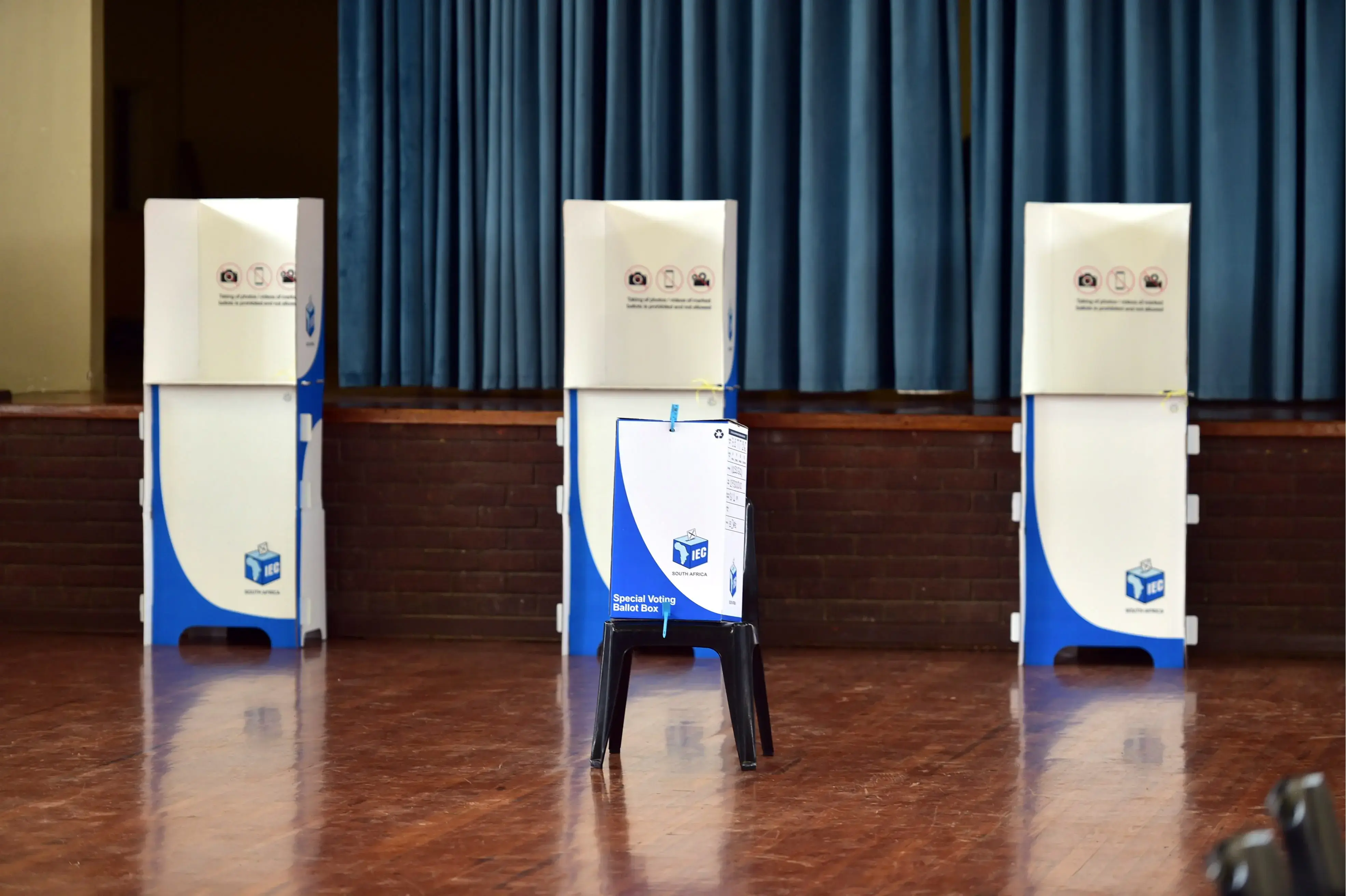
SA has completed the 2026 local government elections and has just over two years to prepare for the May 2029 national and provincial elections.
Consequently, the Electoral Commission of SA’s legacy is likely on citizens’ minds.
Its best opportunity is to use this year’s momentum to encourage stakeholder involvement in policy and legislative reforms, with a positive outcome.
However, patience and resolve will be needed to resist vested interests aiming to freeze the electoral landscape in legislative bodies and administrative centres.
The public has grown weary of recent unhelpful electoral law reforms and proposals with uncertain goals, which have lowered morale among undecided voters and added burdens for loyal ones.
Yet both the Electoral Commission and the voting population have already absorbed the political cost of administrative shortfalls in past elections, which produced low turnout in some districts and negative feedback on voter satisfaction.
So, what next?
First, the expected wave of newcomers in the elections proved true nationwide.
In many districts, first-time parties and independents outperformed several incumbents, creating more than 127 hung municipal councils.
The atmosphere in various wards has felt lighter since results emerged, and there are strong hopes that most councils can now act transparently to limit past administrations’ destructive, unaccountable, and concentrated powers.
In local government elections, voters often signal dissatisfaction with current conditions and evaluate how well basic services are delivered.
By contrast, national and provincial elections tend to reflect hopes and fears about the future.
The 2026 results indicate that, in time, no single party will control more than three of the nine provinces.
Consequently, we should ensure that current electoral laws foster an environment where independent candidates and independent MPLs and MPs can encourage participation and open new ways for citizens to hold representatives accountable.
Although independent candidates lack the large electoral forces that parties deploy, the framework must adequately protect their rights when they contest and serve after winning.
They should receive the same treatment and concern for a free and fair election, along with the right to hold office without obstruction, as the dominant parties do.
Is there such a thing as a “foolproof” SA election?
These elections were more comprehensive than past ones and less chaotic than some expected, thanks to various stakeholders, including the Election Monitoring Network’s peace-building democracy, civic, and voter education programme.
Political party negotiations for coalition governments must finish before municipal managers can hold the first council meetings within 14 days of the November 13 Government Gazette publication of elected councillors.
A concern is that provincial departments had to halt some managers who called these meetings early at high cost, seemingly enriching politically-linked service providers.
These initial gatherings convene in costly venues to accommodate guests and officials, including the Electoral Commission and the media; stronger regulation is needed to prevent such risks.
Another issue is that some parties inserted unsuitable candidates when adding to their lists after the Electoral Commission asked parties with fewer proportional representative candidates than seats won to submit names for the shortfall.
Rather than following the law by providing names and details to fill the gap, some parties used the chance to alter lists or swap candidates.
The commission was right to block this and require that parties may only change list order or replace nominees after the first council meeting date, set in the Municipal Structures Act.
Some may see compliance as inviting waves of replacements for councillors, mayors, and speakers and call it instability. But, I expect it to be a welcome chance to remove unsuitable councillors.
The public must stay alert and resist unscrupulous politicians seeking to enrich themselves through corruption.
Such attention remains essential as voters in five municipalities participate in by-elections triggered by two instances where parties reassigned ward councillors who secured more than one seat, and three cases following the deaths of ward councillors in ward 16 of Raymond Mhlaba Municipality in the Eastern Cape (ANC candidate), ward 12 of Merafong Municipality in Gauteng (ANC candidate), and ward 17 of uMlalazi Municipality in KwaZulu-Natal (IFP candidate).
This oversight must extend to tracking progress in filling the 1,701 district council seats once the Electoral Commission finalises arrangements for local representatives to occupy all 994 (60%) seats that will supplement the 707 (40%) already filled through the district proportional representation ballot.
We should keep demanding the prompt removal of unsuitable councillors identified during this time, following the same approach used before the elections and guided by electoral laws and the constitution.
We can take pride in broad acceptance of the results, including in four voting districts in the Eastern Cape, Free State, Limpopo, and Mpumalanga where two or more ward candidates received equal votes.
Our engagement with these processes should remind us that active citizenship in a democracy is always triumphant. It can also be quiet, its influence echoing long after contact with those we elected.
This is one of the great privileges of democracy — yet, as I now see, a constant responsibility.
Our electoral system, a core part of our democracy, invites voters to voice both their top preference and their ‘least-worst’ choice.
Some voters without a preferred party elected the most acceptable candidates for a municipal council that must serve everyone.
In this way, incoming councillors must be accountable and accessible, aware they rely on support from all communities they represent, while advancing, not weakening, participatory and representative democracy.
No-one should use these results to entrench an elite group of party leaders at the cost of less powerful or emerging voices.
Such action threatens to undermine SA’s drive for democracy and a better society that this new era aims to promote.