

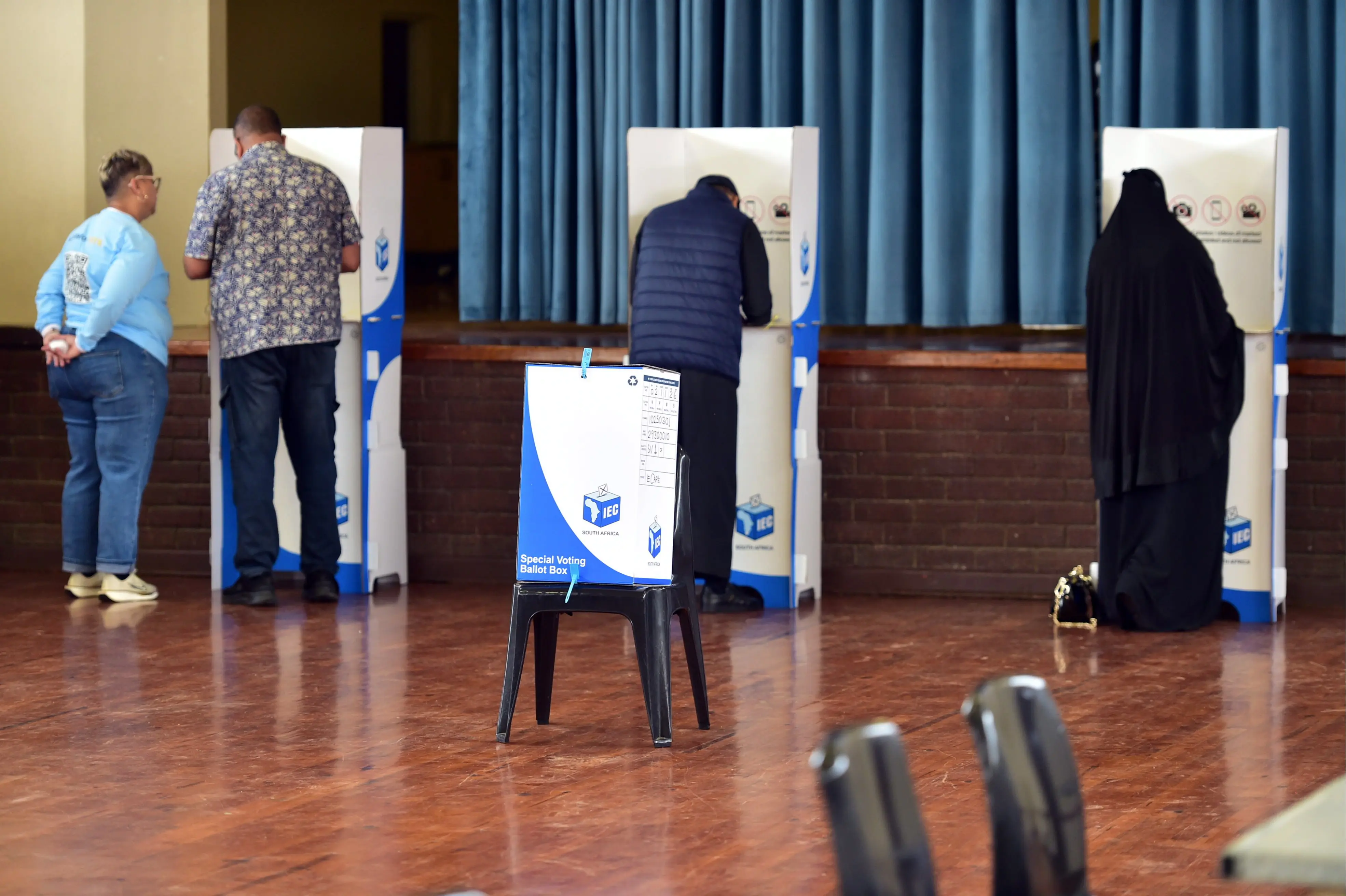
SA has entered the final stretch towards the 2026 local government elections.
Special voting is under way, ahead of the main voting day on Wednesday.
Campaigns have reached their final pitch, and communities are being asked to make a decision that will shape their everyday lives for the next five years.
But beyond the contest for council seats lies a bigger question: Will the ANC retain its dominance in municipalities, or are we about to witness coalition governance spread from metropolitan municipalities into local municipalities?
These elections arrive at a moment when the ANC can no longer take its electoral support for granted.
Its loss of a national parliamentary majority in 2024 demonstrated that SA's political landscape has changed.
At local level, the question is even more immediate.
Municipalities are where residents experience government most directly: when taps run dry, rubbish is not collected, roads are full of potholes, sewage flows into streets and electricity infrastructure fails.
For many voters, local government is not an abstract political debate.
It is the daily test of whether democracy is delivering.
Communities have been crying out about poor service delivery for years.
Protests, petitions and public meetings have repeatedly exposed frustration with unreliable water, sanitation failures, crumbling roads, uncollected waste and municipalities struggling with financial and administrative problems.
These are not minor inconveniences. They affect public health, dignity, economic activity and people's confidence in the state.
The ballot box now offers residents an opportunity to turn that frustration into a political decision.
But will they?
One of the most important questions facing the electorate is whether dissatisfaction with municipal performance will translate into changed voting behaviour.
Will residents hold governing parties accountable, particularly the ANC where it leads municipalities?
Or will historical loyalty, liberation movement identity and the familiarity of voting for the same party continue to outweigh the immediate experience of poor governance?
There is no simple answer. Political loyalty is shaped by history, identity and the sacrifices associated with the struggle for democracy.
Those connections should not be dismissed.
However, loyalty cannot become a permanent exemption from accountability.
The democratic right to vote also carries the responsibility to assess whether elected representatives have honoured their promises.
A party's historic contribution to freedom cannot, on its own, justify years of municipal failure.
Equally, voters should not assume that changing the governing party will automatically solve every problem.
Any party seeking power must demonstrate that it has the leadership, integrity and practical plans to govern.
Coalition politics is likely to be another defining feature of these elections.
Since the 2021 local government elections, coalition arrangements have become a familiar, and often turbulent, feature of metropolitan governance.
In several metros, no single party has secured an outright majority, making agreements between parties necessary to elect mayors and pass budgets.
Yet this experience has exposed the weaknesses of coalitions built on political convenience rather than a shared programme.
Leadership changes, disagreements and shifting alliances can paralyse councils and disrupt service delivery.
Residents should not have to pay the price for political parties treating municipal government as a permanent negotiation over positions.
The 2026 elections may extend this reality beyond the metros.
If support for established parties fragments further, local municipalities could also find themselves governed through coalitions.
This would mark an important shift in local political culture.
Coalition government is not inherently a failure; in a diverse democracy, parties can work together in the public interest.
However, it requires clear agreements, transparency and a commitment to keep municipalities functioning despite political disagreements.
The test of a coalition should not be how many parties share executive positions, but whether residents receive reliable services and responsible leadership.
The record number of approved special-vote applications also deserves attention.
According to the Electoral Commission, more than 2.65- million applications were approved, representing a 131% increase compared with the 2021 elections.
Although this figure does not tell us which parties these voters support, it demonstrates the importance of making electoral participation accessible.
Every eligible voter should have the opportunity to make their voice count.
Ultimately, these elections should not be reduced to whether the ANC wins or loses.
The deeper issue is whether SA's local democracy can produce municipalities that are accountable, capable and responsive.
Voters must look beyond campaign slogans, political colours and promises made at rallies.
They should ask what has changed in their wards, whether public money is being used responsibly, whether councillors are accessible and whether parties have credible plans to repair infrastructure and improve services.
The ANC may remain the largest political force in many municipalities, but being the largest party is not the same as earning an unquestionable mandate.
Equally, opposition parties should not mistake public frustration with the ANC for automatic support for themselves.
Every party must be judged by its record, its candidates and its readiness to govern.
As South Africans cast their special votes and prepare for November 4, one thing should be clear: the vote is not an inheritance to be handed to a political party out of habit.
It is a tool of accountability.
Communities have spoken through protests and complaints; now they have an opportunity to speak through the ballot box.
The question is whether they will choose continuity, demand change, or produce a political landscape in which parties must learn to govern together.
Whatever the outcome, the real winners should be the residents whose lives municipalities exist to serve.
Nandiswa Mpolweni, PhD public administration, Durban University of Technology