


As the November 4 local government elections rapidly approach, the citizens of Buffalo City Metro find themselves at a critical historical crossroads.
For years, the rhetoric of local government has been dominated by grand political promises and macro-economic visions.
Yet, as residents navigate the daily realities of dry taps, dark streets, donga-like potholes, surging drains and overflowing sewage in the midst of dire financial mismanagement and zero accountability, the upcoming elections have rightfully distilled down to a singular, uncompromising theme: a return to the absolute basics of local governance.
The crisis facing BCM is no longer a matter of subjective political debate; it is an objective, audited reality.
The auditor-general’s (AG) latest reports paint a damning picture of a metro in severe administrative distress.
Year after year, the AG has flagged deep-seated financial mismanagement, highlighted by billions of rand in irregular, unauthorised, and wasteful expenditure (the cumulative irregular expenditure stood at R10.69bn by 2025 ).
Crucially, the AG’s findings draw a direct, unassailable line between broken financial controls in the council chamber and the collapse of infrastructure on our streets.
When procurement processes are compromised and internal oversight is deliberately weakened, it is the ordinary citizen who pays the price.
The consequences of this systemic failure are visible across every corner of the municipality, from the suburbs of KuGompo City to the townships of Mdantsane.
Water outages have transformed from an occasional inconvenience into a full-blown structural crisis, stalling local businesses and disrupting households.
Our electricity grid remains fragile, battered by a lack of preventative maintenance and plagued by an archaic, erratic billing system that leaves residents trapped in endless disputes with corporate municipal structures.
Perhaps nowhere is the administrative neglect more visible — and foul — than in the total failure of sewage control.
Raw wastewater regularly pools in public spaces and leaks into vital environmental ecosystems, posing a severe public health hazard.
Mdantsane is foul with a putrid stink in most streets. Basic civic maintenance has effectively ground to a halt.
Pot-holed roads go unrepaired, streetlights remain dark for months, and basic environmental upkeep such as grass-cutting is totally neglected until a looming election forces a sudden, superficial flurry of activity.
These pre-election maintenance pushes are rightly viewed by an exhausted electorate not as sustainable governance, but as cynical campaign strategies.
At the heart of this operational paralysis lies the twin plagues of corruption and a lack of council accountability.
The AG has repeatedly warned about the metro’s culture of non-compliance and the lack of consequences for officials who flout the Municipal Finance Management Act (MFMA).
The current SIU investigation into, among other failed projects, the Mdantsane swimming pool which is still incomplete after R71m has been pumped into it since 2014 is one example.
This culture feeds directly into nepotism and allegations of "jobs-for-votes" schemes, where municipal employment is allegedly weaponised for political patronage rather than awarded on professional merit.
When qualifications are bypassed for political loyalty, the entire administrative machinery slows down, losing the capacity to project-manage basic infrastructure upgrades or spend capital grants effectively.
The 2026 election presents BCM voters with a powerful mechanism to enforce accountability.
The political landscape contesting the metro — spanning the ANC, DA, EFF, ActionSA, UDM, ATM & Rise Mzansi — offers vastly different prescriptions for the city's ailments.
Opposition parties are aggressively leveraging the AG’s findings to argue that the governing party has squandered its mandate, promising radical transparency measures such as open, public recruitment panels to kill nepotism.
Conversely, the governing ANC is fighting to protect its absolute majority, pointing to recent infrastructure rollouts and emergency stabilisation plans as proof of an internal turnaround.
Ultimately, the choice belongs to the voters. The upcoming ballot must not be cast on the basis of historical sentiment or empty political theatre.
It must be a hard-nosed assessment of who can reliably deliver clean water, stable electricity, functioning sewers, and honest administration.
BCM cannot survive another five years of audited regression and crumbling infrastructure.
On November 4, residents must use their vote as a precise tool of accountability.
We must demand a council that respects the AG’s directives, enforces strict institutional consequences for corruption, and prioritises the dignity of its people through the seamless delivery of basic services.
The survival of our metro depends on nothing less.
Prof Patrice Lumumba warns: "We elect hyenas to take care of goats, and when the goats go missing, we wonder why."
We have been warned to be very forethoughtful before voting.
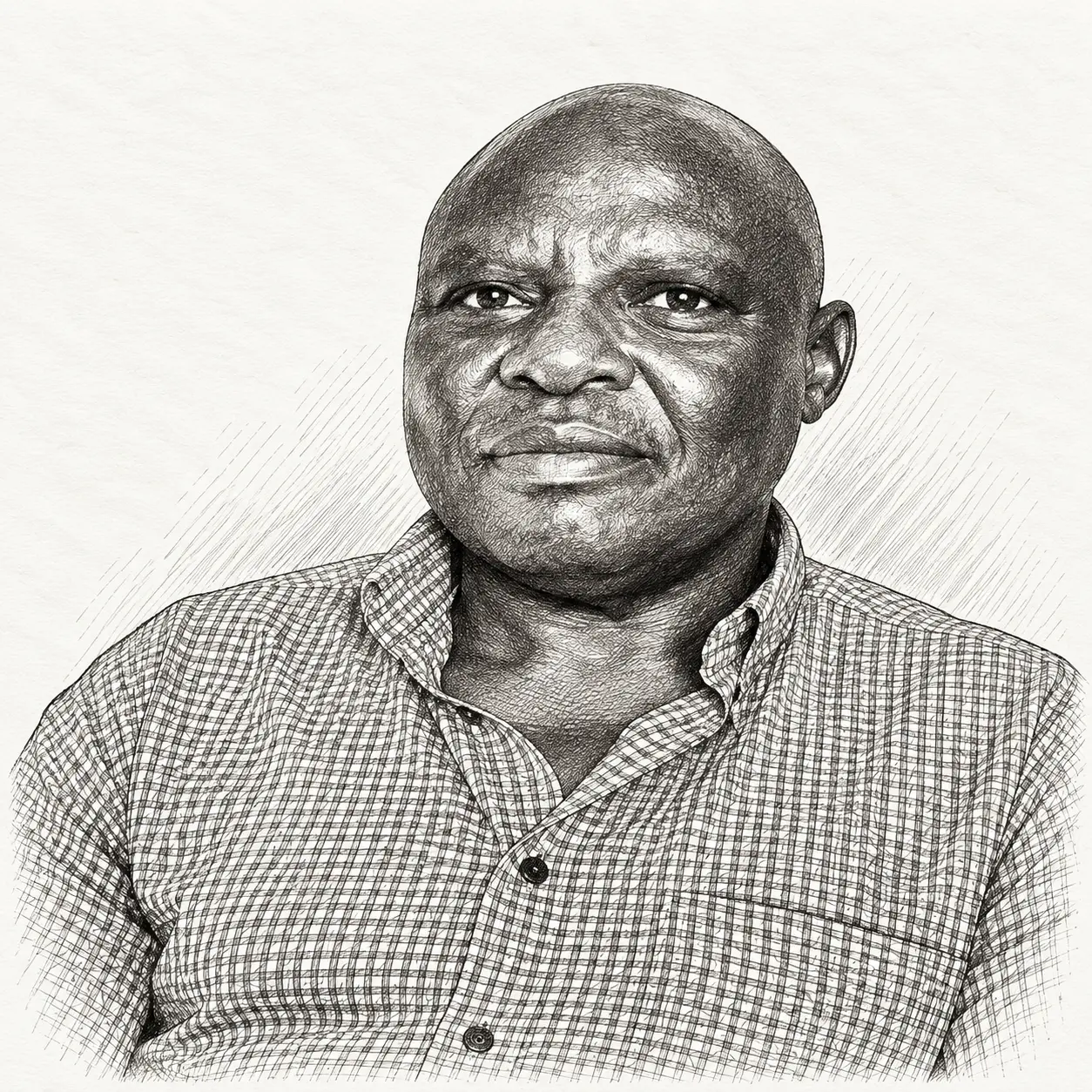
Vivi Mpikashe, founder of Velile Education and Development Solutions.