

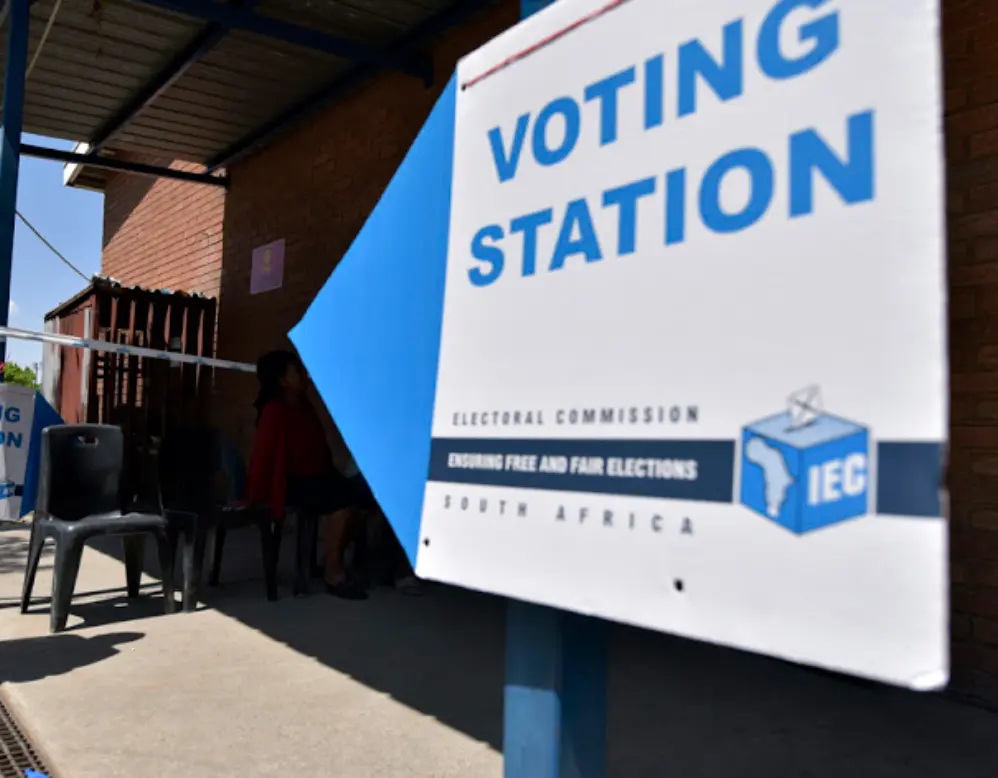
Today marks the commencement of voting in this year’s local government elections, a pivotal moment for renewal.
As we take part in this democratic process, we can strengthen our constitutional democracy by fulfilling our civic duty of voting.
Regrettably, these election campaigns have negatively altered public perception of the electoral landscape, shifting elections from a public discourse about choosing public representatives to a single transaction between voters and candidates.
Public deliberations on substantive policies addressing pressing issues were few and thin.
Many promises remain generic rather than components of a cohesive strategy to enhance local political and socioeconomic development.
Notwithstanding, in the spirit of renewal, we must lead by example and encourage undecided voters who remain hesitant to vote.
This hesitancy often stems from the perception that neither candidate offers a satisfactory option or from disappointment with unfulfilled election promises.
It is important to recognise that while some voters are still deliberating, the majority are not debating whether to support the incumbent government.
Those who are still undecided are unlikely to be swayed by a final recollection of the coalition municipalities’ poor achievements and the individual performance of small parties and independents.
For undecided voters, these are the moments that should be foremost in their minds as we head to the polls in large numbers rather than allowing our democracy to be subverted by abstaining from voting.
In these elections, each vote will uniquely shape the next government’s aims and plans for the future.
If you struggle to vote outside your traditional party affiliation or to vote at all, the cognitive dissonance is uncomfortable, but your resulting inaction does not benefit you.
Instead, it benefits individuals and groups who abuse political power for their own gain.
This election is not a sparring match; it is a crucial political choice with long-term consequences for life.
We owe it to ourselves and to each other to use our hard-won right to vote thoughtfully, no matter how uncomfortable doing so may be.
The latest polls confirm this reality, as it applies to the overwhelming majority of municipalities across the country where no single party is assured of a clear majority.
Much of the discussion on election outcomes will focus on which parties cross the electoral threshold, which votes are wasted and which arrangements might finally determine which coalitions govern which municipalities.
However, an undecided voter must measure political change in terms that extend well beyond speculation about possible power-sharing arrangements, voting in a way that answers fundamental questions on accountability and good governance instead of focusing on who you are for.
The undecided voter is the wildcard of every poll, as even voters who respond genuinely to pollsters may answer differently when the moment of truth arrives inside a voting station.
The poll that counts is, indeed, when a voter stands alone in the booth and marks their ballot.
We want to see democracy in action in these elections as we all strive for a high voter turnout nationwide.
Young people make up the majority of undecided voters, partly because they navigate an increasingly uncertain future.
While every generation faces challenges during adolescence, today’s young people face distinct pressures that seem more pervasive and are often being overlooked in election manifesto promises.
From climate change and mental health concerns to academic pressure, housing costs, and job and economic insecurity, voters today are navigating a complex set of expectations.
Understanding voter frustrations, including those expressed through nationwide protests, requires examining the social conditions that shape our lives beyond individual experiences.
Adolescence, in real life and in a fledgling democratic nation, has long been characterised as a period of “storm and stress”, reflecting a belief in its universality and inevitability as a time of emotional turmoil, behavioural conflict and identity crisis.
However, most election manifesto promises have fallen short in addressing these challenges.
They sold the electorate election promises that stereotypically define young people solely by difficulty and disruption, while conveniently ignoring programmes that offer possibility, opportunity and growth.
Yet, realising that potential depends heavily on the political and socioeconomic environments in which young people grow up.
Economic concerns add another layer of pressure, as rising living costs, high tertiary education expenses and uncertainty about future employment rank among young people’s greatest worries.
For many, this contributes to feelings of anxiety, worry, sadness, anger and helplessness about making political choices in these elections and the future.
These concerns are particularly challenging because many believe that decisions affecting young people’s futures are often made without their meaningful involvement or consideration of their needs.
This is evident in the lack of convincing consideration in election promises and the low placement of young candidates on party election lists.
This cycle of intergenerational injustice must be acknowledged and addressed through active voter participation.
When individuals feel they have little influence on issues that will meaningfully shape their lives, it can lead to frustration.
Despite these challenges, it would be incorrect to portray undecided voters as a multigenerational group defined solely by anxiety or pessimism.
Protests over poor delivery of basic services, hunger, poverty, and chronic unemployment can express frustration, but they also show agency and a desire to shape decisions about the future. This must be harnessed by actively participating in these elections.
Each voter, regardless of age, must make their mark to show they are not passive recipients of social pressure, but can organise, question existing arrangements, and seek alternatives through the ballot.
The difficulties each voter faces are not entirely new. What makes each voter’s experience distinctive is the combination of pressures and the uncertainty surrounding the transition from one administration to another.
Rather than asking whether we, as citizens, have it harder than previous generations, we should ask and answer more productive questions through our deliberate vote: what kind of society are we asking to navigate collectively?
And which candidates do we choose into public office to make it caring, prosperous and more democratic?
Nkosikhulule Xhawulengweni Nyembezi, researcher, policy analyst, human rights activist