

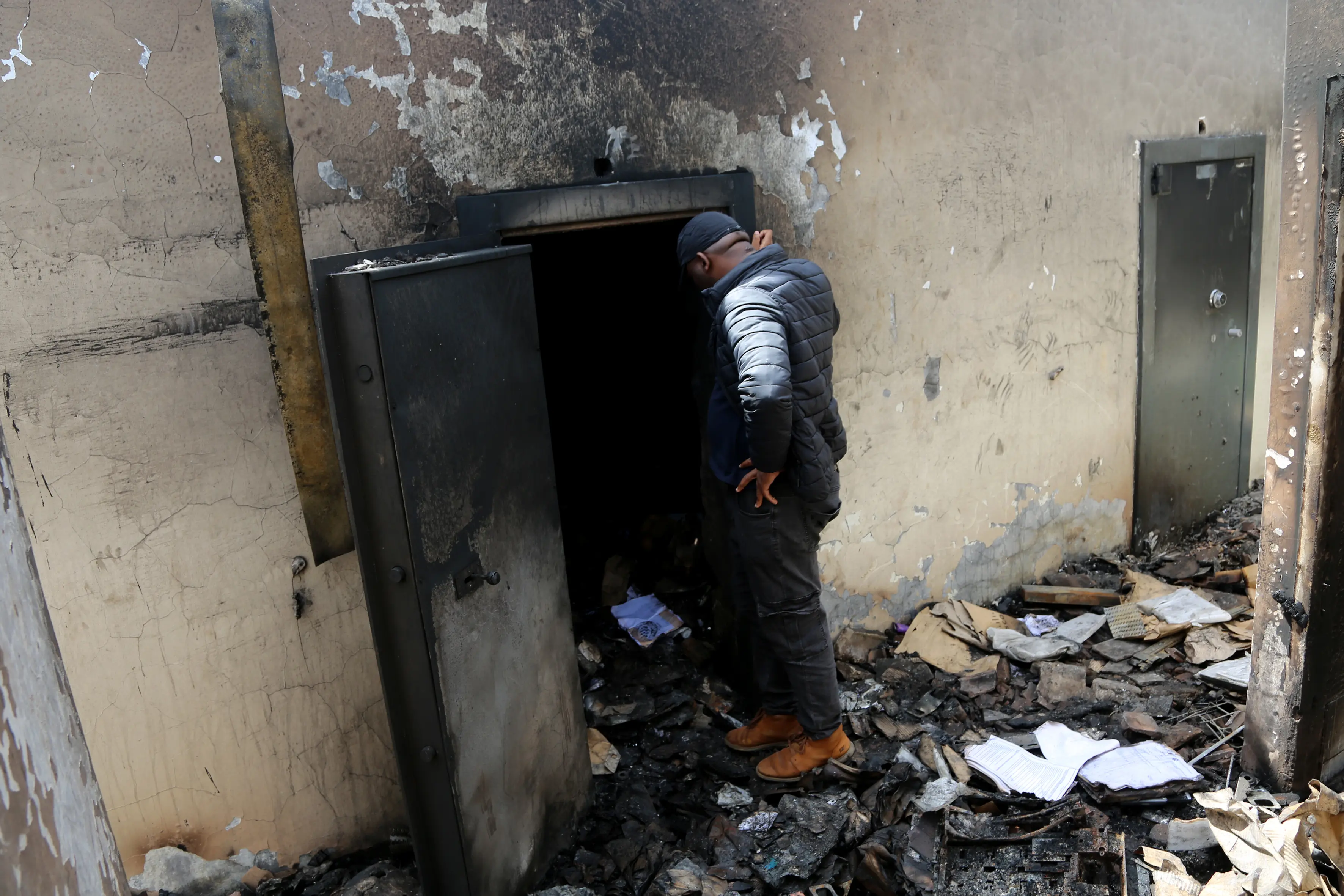
Police in KuGompo City are renting offices around Mdantsane and in the CBD.
While the charges for the rented offices could not be ascertained, it is illogical that a state-of-the-art police building has been left abandoned in Fort Jackson.
The R25.5m state-funded building was intended to be used by various police units, including the Family Violence, Child Protection and Sexual Offences unit, supply chain management, forensics and the tactical response team.
All these sections deal with very sensitive information.
When our team visited the site recently, they found that it had been left unsecured, leading to extensive vandalism, broken safes and recent arson.
What was even more alarming was the discovery of sensitive documents left behind at an abandoned office.
These included rape dockets, a will, an extortion case and affidavits.
The documents contained personal information, such as ID numbers, cellphone numbers and home addresses.
This discovery should prompt an urgent examination of how the police safeguards confidential records and accounts for its responsibilities when facilities are closed.
A police office may be abandoned, but the responsibility attached to the information stored inside it does not disappear.
Official records must be protected, properly accounted for and handled in accordance with the law, regardless of whether a building remains operational.
The concern is not simply that documents have been left behind.
It is what their exposure could mean for the people whose information they contain, the integrity of police work and the public’s confidence in law enforcement.
The police must explain how the documents came to be left at the premises, who was responsible for securing them and what procedures were followed when the office was vacated.
These are not unreasonable demands. They are basic questions of accountability from an institution entrusted with protecting the public and upholding the law.
The immediate priority must be to secure the premises and recover the documents through a properly documented process.
Officials should assess the sensitivity of the material, determine whether personal information or active investigations may have been compromised, and take appropriate steps to protect anyone who might be affected.
The public should not have to wonder whether sensitive information entrusted to the police has been left vulnerable because an office is no longer in use.
People who report crimes, provide statements or co-operate with investigations are entitled to expect that their information will be treated responsibly.
The discovery must, therefore, be more than an embarrassing episode followed by assurances that procedures will be reviewed.
It should lead to verifiable answers, clearly assigned responsibility and practical measures to prevent a recurrence.
Abandoned buildings cannot be allowed to become abandoned responsibilities.
Daily Dispatch