

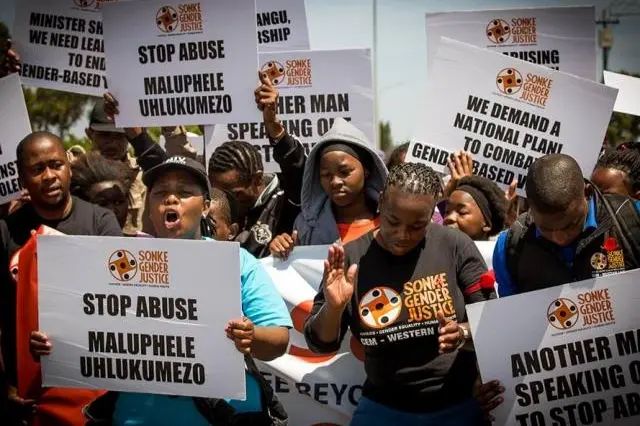
The debate around gender-based violence in SA has, quite rightly, placed enormous attention on violence against women and children.
The statistics on physical and sexual violence are deeply concerning, and no responsible person should play them down.
However, as we confront this national crisis, perhaps we should ask an uncomfortable question: are we sufficiently recognising all forms of GBV, including the experiences of men who suffer emotional and psychological abuse within intimate relationships?
I accept that men are disproportionately represented among perpetrators of serious physical violence. That reality must be confronted.
But recognising this reality should not prevent us from asking whether our understanding of abuse has become too closely associated with physical violence.
What happens to a man who is repeatedly humiliated, threatened, controlled, manipulated or emotionally abused by his intimate partner?
Where does his experience fit into our national conversation about GBV?
SA law recognises emotional, verbal and psychological abuse as forms of domestic violence.
Yet there remains a question about how effectively such experiences are identified, reported and addressed, particularly when the victim is a man.
Physical injuries can provide visible evidence. Psychological abuse is often invisible.
It can take place behind closed doors, with no witnesses, photographs or medical records.
A victim may be left with little more than his own account of what happened.
This raises an obvious question: Where is a person supposed to find a witness to something that happened between intimate partners in the privacy of their own bedroom or home?
This is not an argument that every allegation should automatically be accepted as fact.
Due process and fairness remain essential.
Rather, it is an argument that we should recognise the particular difficulties associated with proving abuse that occurs in private and ensure that victims are not dismissed simply because their suffering does not leave a visible injury.
There is another issue that deserves greater attention: how families respond when a person repeatedly engages in offending behaviour.
We often ask how an abusive man became the person he is. That question is important.
But perhaps we should broaden it: What role do families, communities, schools, peers and social norms play in shaping behaviour?
In some families, a child who repeatedly gets into trouble may be protected from the consequences of his actions.
Parents or grandparents may intervene whenever he is arrested, provide financial assistance, or repeatedly excuse his behaviour.
There is nothing inherently wrong with a family supporting a loved one who has made a mistake. But there is a point at which protection can become counterproductive.
If serious offending is repeatedly excused, victims are blamed, accountability is avoided, and the offender is shielded from the consequences of his actions, we should ask whether such responses may inadvertently reinforce problematic behaviour.
This is not about blaming mothers or grandmothers for the behaviour of adult men. Ultimately, adults are responsible for their own conduct.
Nor should we assume that a protective mother creates an abusive son.
As a social worker who has worked within the child justice and probation environment, I have come to appreciate the importance of early intervention, family functioning, accountability and rehabilitation in changing behaviour.
Children who come into conflict with the law do not simply emerge from nowhere.
Their behaviour develops within families, communities and social environments.
This does not excuse criminal behaviour. Rather, understanding the circumstances surrounding offending helps us identify opportunities for intervention before problematic behaviour becomes entrenched.
The same principle should inform our approach to GBV.
We should be able to hold two truths at the same time: women and children face serious and often devastating violence, and men can also be victims of abuse.
These realities are not mutually exclusive.
We should also distinguish between different forms of violence. Physical, sexual, emotional, psychological, economic, and controlling abuse can manifest differently and have different consequences.
If our objective is genuinely to reduce GBV, our response must be broad enough to identify violence wherever it occurs, while remaining honest about the different patterns and severity of violence experienced by women and men.
Every victim deserves to be heard, and every perpetrator deserves to be held accountable.
Thanduxolo Zimba is a social work policy manager under the social crime prevention directorate at the provincial department of social development. He writes in his personal capacity.