

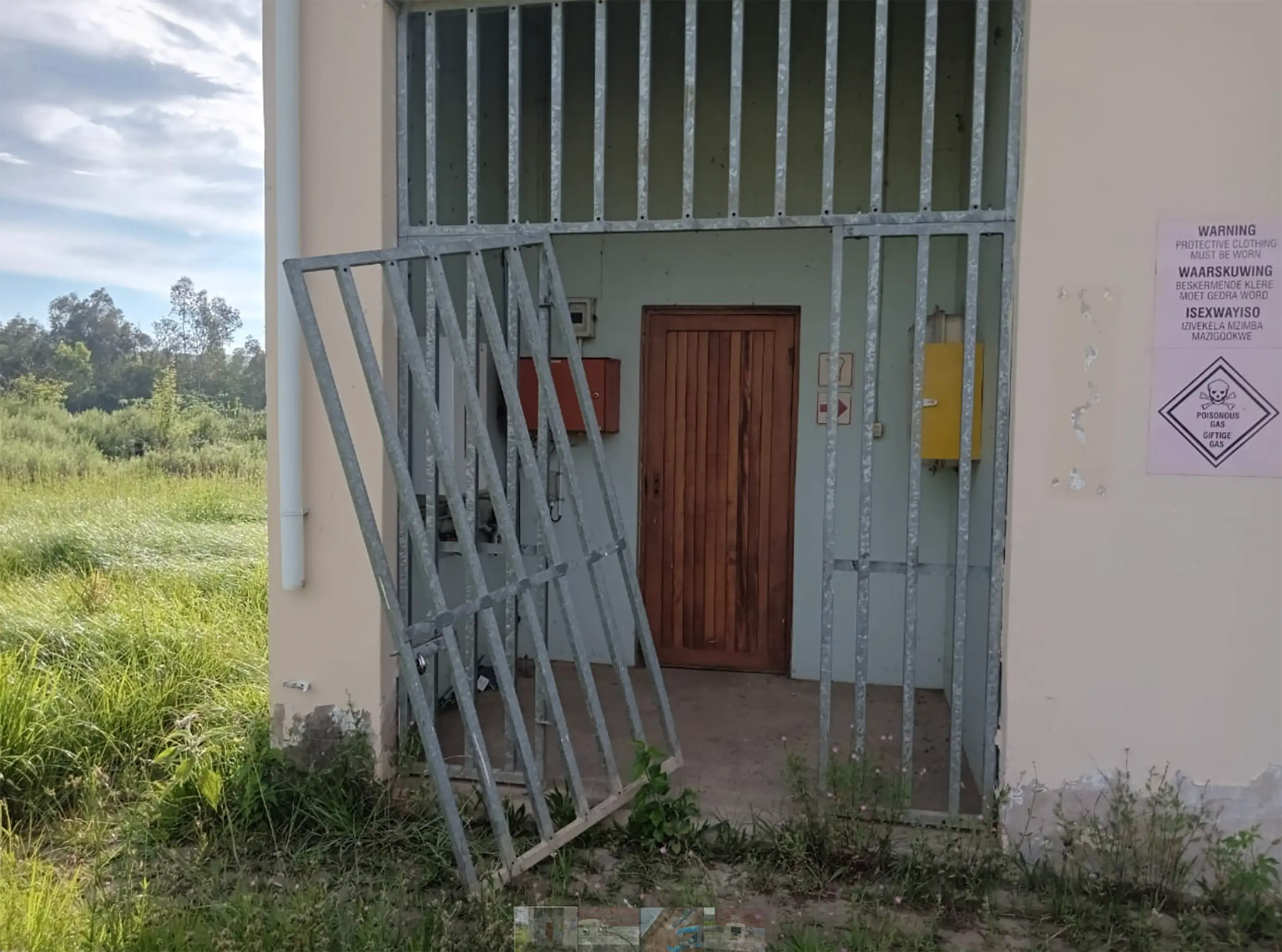
The OR Tambo district municipality, which has already spent in excess of R200m repairing vandalised water infrastructure and replacing stolen cables in water schemes in the past two years, was hit by criminals again at the weekend.
This after it was discovered that Mthatha’s wastewater treatment works plant was broken into and crucial components stolen by thieves.
District municipal spokesperson Ncebakazi Kolwane said the discovery was made by security personnel at about 4am on Sunday while conducting routine patrols.
The guards discovered that the chlorine room in the facility had been forcibly entered and a compressor machine removed.
“The municipality’s technical team is conducting an assessment to determine the full extent of the theft and damage, the function of the affected equipment within the treatment process and whether the incident has compromised any stage of plant operations,” Kolwane said on Monday.
“The chlorine room houses equipment associated with the disinfection stage of wastewater treatment, an important process in ensuring that treated effluent meets the required quality standards before discharge.
"Any confirmed disruption to this process will be addressed as a matter of priority.”
However, she said the district authority would not speculate on the operational and environmental impact of the incident.
The outcome of the technical assessment would determine whether treatment capacity, process performance or final effluent quality had been affected.
“Beyond the immediate operational concern, theft and vandalism of water and sanitation infrastructure impose significant financial costs on the municipality.
"Resources intended for planned maintenance, rehabilitation and service improvements are instead redirected towards emergency repairs and the replacement of stolen equipment.”
Meanwhile, concerned district mayor Mesuli Ngqondwana urged those who continued to target public infrastructure to understand the wider consequences of their actions.
“What they steal today can become a service our people lose tomorrow.
"We condemn this criminality and call on anyone with information to assist law enforcement authorities.
"Public infrastructure belongs to all of us, and protecting it must become everybody’s responsibility,” he said.
Kolwane confirmed this was not the first time the facility had been hit by criminals.
“The facility has experienced break-ins and vandalism previously, after which the municipality refurbished the plant.
"This is, however, the first break-in since the refurbishment was completed.
"The specific items stolen or damaged during previous incidents are still being verified from historical records.”
Mthatha businessman and Eastern Cape Chamber of Business secretary-general Dr Andile Nontso described the vandalism of public infrastructure as sad, saying the town had been battling persistent water and electricity outages for years, leaving the community suffering.
“We need to deploy security and cameras in all strategic points because security is cheaper than repairing vandalised infrastructure.
"The inconvenience to the community and businesses is huge.”
Recently, the municipality reported the hijacking of two bakkies at its water and sanitation department, in two separate incidents, while responding to water emergencies.
One was later discovered in Qumbu after it had been hijacked in Mthatha.
Community activist and former municipal councillor at the King Sabata Dalindyebo Local Municipality, Pasika Nontshiza, reacted with shock at the news of Sunday’s incident at the wastewater treatment works plant.
“We always believed that assets of this nature are well protected," he said.
He said the possibility of municipal staff working in cahoots with external service providers could also not be discounted.
In its report last month, the SA Human Rights Commission revealed it had been informed by OR Tambo district municipal bosses that rampant vandalism and copper theft were significant contributors to the deterioration of water infrastructure and disruptions to water services.
The report, titled "Infrastructure Vandalism as a Human Rights Crisis", looked into copper cable theft and scrap metal theft, regulatory and enforcement gaps, as well as the erosion of socioeconomic rights.
“Infrastructure vandalism and illicit metals trading is to be understood not only as criminal and economic concerns but as matters with direct consequences for constitutional rights,” it stated.
“Public infrastructure is one of the principal means through which rights are realised.
"When water systems, electricity networks, schools, clinics and transport infrastructure are stripped or damaged, communities experience the consequences through interrupted water supply, electricity outages, compromised health services and disrupted education.”
The commission’s concern therefore extended beyond the underlying criminal act.
The report said where vandalism was recurring and foreseeable, the human rights inquiry should also consider whether reasonable measures were being taken to prevent harm, regulate the relevant industries, disrupt organised networks, restore services and protect affected communities.
A research commissioned by the department of trade, industry and competition had reportedly estimated the economic damage associated with copper theft at more than R45bn annually.
The commission's report urged that “organs of state must also treat infrastructure protection, restoration and service continuity as part of their constitutional responsibilities, while businesses in the scrap metal value chain should undertake appropriate human rights due diligence and verify the lawful origin of materials".
Daily Dispatch