

SummaryOpen the quick read
- Dougray Scott stars as primary antagonist Quintus Wernich in Invisible, a television adaptation of Deon Meyer's novel, Blood Safari.
- The Scottish actor collaborated closely with the creative team to build a nuanced, sociopathic character comfortable with extreme violence.
- Scott lauded the filming experience in Stellenbosch, praising the welcoming demeanour of South Africans and the quality of local cast members.
- Having first worked in South Africa over three decades ago, Scott reflected deeply on the country's transformation and the legacy of Nelson Mandela.
- Invisible airs on M-Net on Thursdays at 8pm, with streaming options on DStv Stream and Catch Up.
BARBARA HOLLANDS
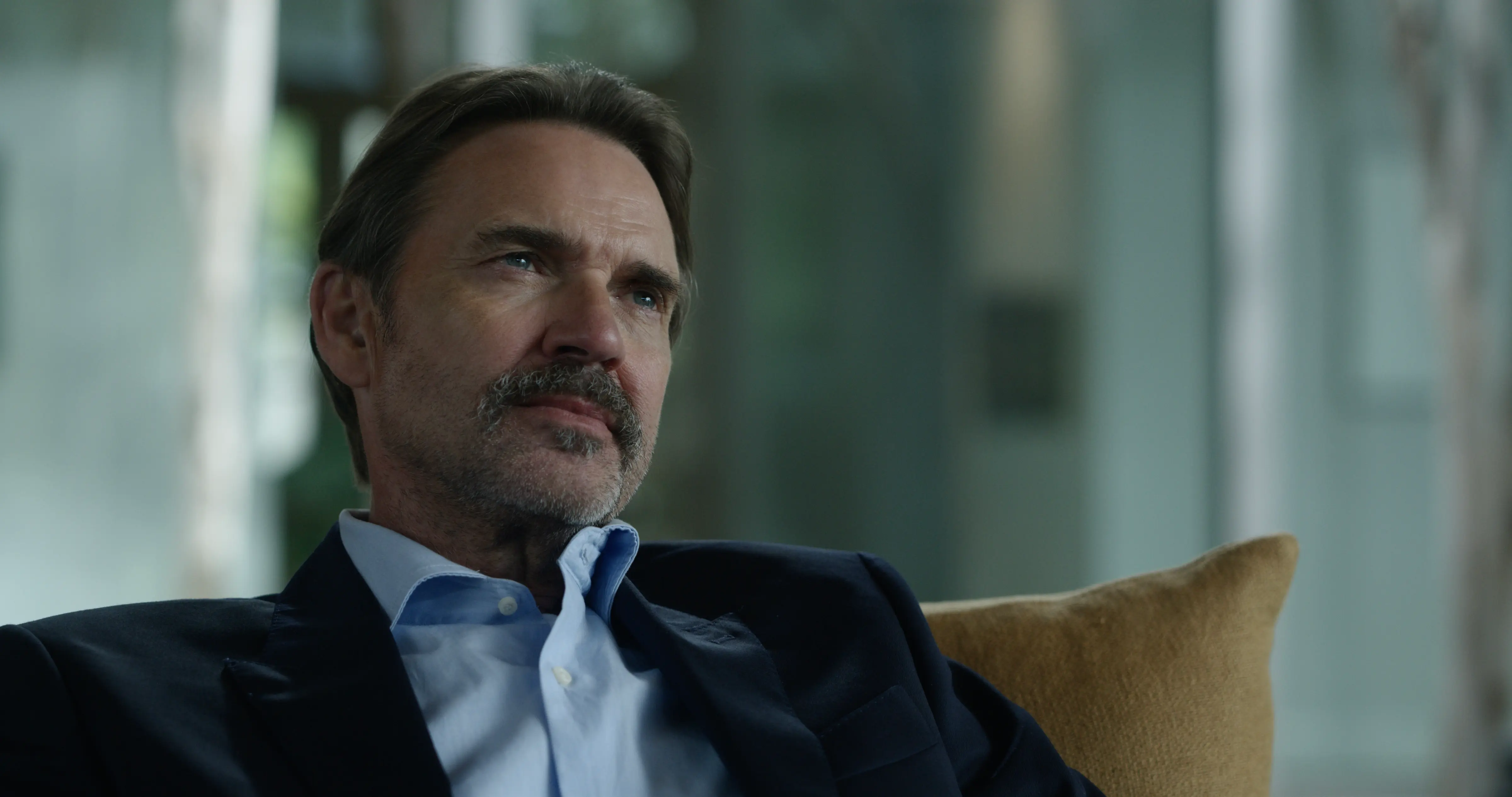
Scottish actor Dougray Scott takes on a dark and dangerous role in Invisible, the action-packed television adaptation of Deon Meyer’s novel Blood Safari, now on screen.
Scott, who also played a villain opposite Tom Cruise in Mission Impossible and has appeared in Desperate Housewives and Batwoman, said shooting in SA was a pleasure because everyone was so charming and welcoming.
Daily Dispatch asked him:
Did you read Deon Meyer’s books before taking on the menacing role of primary antagonist Quintus Wernich?
My sister is a huge fan of his books but I hadn’t read any of them.
The character of Quintus is a construction, an invention.
When I first read the script, there was the seeds of something there and then we collaborated on where the character could go and they changed the premise of what happened in the story with the character and that became more enticing and it also evolved into this interesting, dark character who is very much at home in the nefarious world and he’s also quite sociopathic and so committing extreme acts of violence sits very comfortably.
How to humanise a character like Quintus is a task.
Ultimately one has to feel comfortable to play a character who works in a nefarious world, whose whole life story has been getting transported in a guerrilla-esque military world and who is an ex-soldier.
And someone whose threat of violence is as effective as his actual acts of violence.
And is that the kind of character you like to play?
There was something quite funny about him.
I found him quite humorous in the way he spoke to people and his confidence and just not giving a flying f..k about anything.
When you are presented with someone who is perceived as a villain, you try to find the nuance and how life has shaped them.
No-one is all good and no-one is all bad.
Although perhaps Quintus is all bad! He’s not got many redeeming qualities.
He’s set out on a path of his life to achieve great things and the choices he’s made have affected people existentially, and his world is a world of mayhem and power plays and corruption and coercion, and he’s quite an extreme character.
What was your take on the script when you first read it?
The script was very resonant, it was current, it was pertinent, and it is a political thriller which I’m very attracted to.
Everything was going for this production.
Ultimately it was a great story and the script evolved over the course of months.
What was it like filming in South African locations like the Lowveld?
I filmed in Stellenbosch, so I didn’t go up to the Lowveld, although I have been up there. Stellenbosch was just beautiful.
The biggest difference about filming here is that people are just really nice all the time.
Everyone is so welcoming and smiley. I’m not used to people being so nice to me.
Also, two of my best friends live in Cape Town.
This is God’s country! I was here for filming of Invisible and came back again for Christmas.
I’m coming back in December and then again in February.
Everyone is so nice and charming. Generally I would say the demeanour of people is very different from most other places, and it’s quite refreshing.
That’s why I felt so attracted to come here.
Why do you think that is?
It’s a country that’s obviously gone through a lot of change in the last years, and it’s interesting.
The first time I came to SA for work was 32 years ago and I’ve come back a few times and I’ve seen the progression and how things have changed,
I think SA was lucky. It had Nelson Mandela through that change from the old guard to the new guard.
He was a man with empathy and sympathy and compassion and was one of the most magnificent leaders the world has ever known.
And so you could not have asked for anyone better.
I went to his house in Joburg when I was shooting a movie here about seven years ago and the house was so small and ordinary, and Desmond Tutu’s house was just literally down the street.
And my driver took me to Soweto to the museum, and I had the same reaction to that museum as I did when I went to the Holocaust Memorial Museum in Washington.
It really reminds you of the extremities of humankind, and it’s just intensely moving.
People have a duty to find out about the world and how things happened and how they have changed.
So I find South Africa fascinating.
While filming in Stellenbosch did you hang out with Deon Meyer who lives there?
He’s a lovely man and we had dinner a few times.
You worked with a strong South African ensemble. What did you make of them and is there a particular collaboration that stood out for you?
I think they were terrific to a person and the director Jozua [Malherbe] was phenomenal.
I like being directed. I have ideas, I come on set and I’m very well prepared, but I’m always open to ideas.
You become a better actor when you listen to directors and I think my performance, whatever you think of it, is a lot to do with him.
So if it’s brilliant, it’s me , if it’s bad it’s him! No seriously, he was a joy to work with.
And the South African actors — Tim (Theron), Kim (Engelbrecht), Frank (Rautenbach) ... all of them were wonderful. I had a great time. They were all just brilliant actors.
Is there a South African experience or food that you took home to London with you?
Biltong! And the steaks are very good.
* Invisible is on M-Net (DStv channel 101) on Thursdays at 8pm. Episodes are also available on DStv Stream and Catch-Up.