

SummaryOpen the quick read
- The Buffalo City Film Festival will honour the late filmmaker Ben Nomoyi with the premiere of Derrick Makaula's documentary, Ben Nomoyi: Portrait of a Legend.
- Nomoyi made history by penning Nolitye, the first television production in the vernacular, which earned a spot in the Guinness Book of Records.
- Mentored early on by Athol Fugard, he dedicated his career to authentic isiXhosa storytelling and challenging the lack of regional representation in national broadcasting.
- Beyond directing and writing, Nomoyi established training programmes in East London to nurture emerging technicians, writers, and directors outside major metropolitan centres.
- Industry stakeholders are urged to reform outdated provincial funding frameworks to fully realise Nomoyi's vision for a thriving, self-sustaining Eastern Cape film sector.
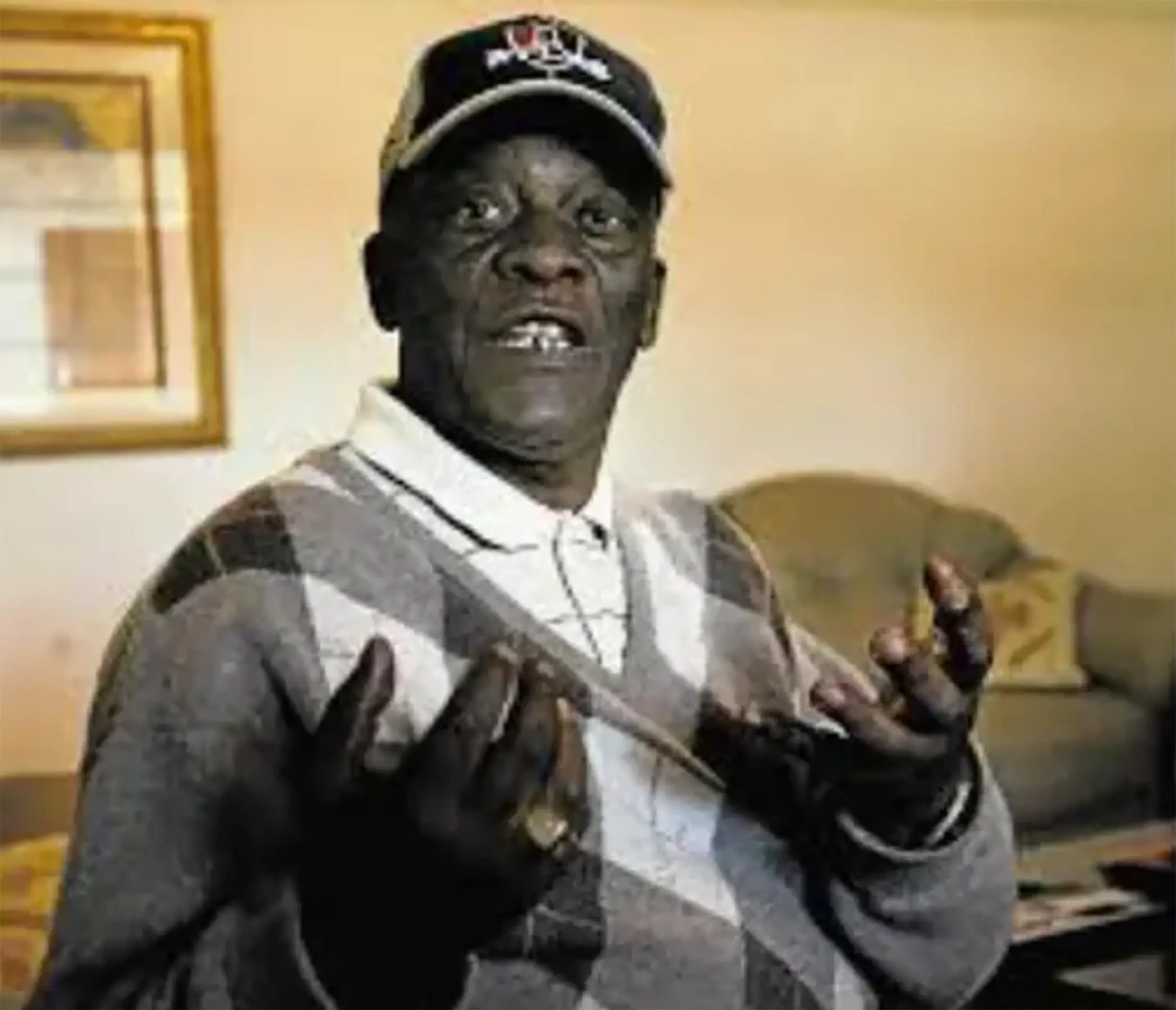
There are filmmakers who make pictures, and there are filmmakers who make it possible for others to imagine themselves inside the picture. Ben Nomoyi belonged to the latter tradition.
He understood that cinema was never merely a succession of images projected against a wall.
It was a declaration of presence, an archive of belonging and, for communities long relegated to the margins of the national imagination, an opportunity to reclaim the right to tell their own stories.
Affectionately known as Oom Ben, Nomoyi was a pioneering Eastern Cape storyteller whose contribution to SA film and television extended beyond the productions bearing his name.
His was a career shaped by political conviction, literary craftsmanship and an abiding commitment to developing the creative potential of others.
He belonged to that generation of cultural workers for whom storytelling was not an escape from the realities of society, but a means of confronting them, interpreting them and imagining something better.
On October 29, the Buffalo City Film Festival will honour Nomoyi at the Cortex Hub in KuGompo City, marking a decade since his death.
The commemoration will feature the premiere of Ben Nomoyi: Portrait of a Legend, a documentary by Derrick Makaula.
Makaula was one of Nomoyi’s students during his time at Dolce Sounds, an audio-visual company based in KuGompo City.
It was Prof Caesar Nongqunga, the chief apostle of Twelve Apostles Church in Christ, who opened the doors when Nomoyi decided he was relocating to the Eastern Cape and placed him at the helm of Dolce Sounds to realise his vision to train budding filmmakers.
The screening promises more than a retrospective glance at an accomplished artist. It invites audiences to reconsider the life of a man whose creative journey illuminates the relationship between political struggle, indigenous expression and the enduring quest for a film industry that reflects the full complexity of SA life.
Nomoyi’s journey was neither conventional nor without interruption.
Born in Korsten, Gqeberha, Nomoyi was consumed by a capricious idea of writing a musical in 1967.

He debuted as writer and director of the musical Born to Lose, which toured the country for two years.
He credits prolific playwright, actor and director Athol Fugard as a well of inspiration.
From there, Nomoyi’s career gathered pace when lady luck came knocking at his door.
He had left his home in Gqeberha with a bag full of dreams and later chanced on the news that then state-owned broadcaster, the SABC, had commissioned a white woman to pen a children’s series for black audiences.
Halfway through the production, the woman collapsed under the weight of the deadline.
Tim Ellis, then former head of what was then known as TV2, decided to test the ink in the blood of a new bright spark and commissioned Nomoyi, in what became the penulmate children's series Nolitye, the first production in the vernacular, which earned it a place in the Guinness Book of Records.
From there on, Nomoyi went on to write and direct a veritable host of shows for SABC and later M-Net.
He initially aspired to become a lawyer, an ambition shaped by the possibilities of education and the turbulent political climate in which his generation came of age.
His activism led to his expulsion from the University of Fort Hare, a formative rupture that redirected the course of his life.
Sometimes, history closes one door only for an individual to discover an entirely different language through which to engage the world.
For Nomoyi, that language was storytelling. His transition towards writing and the performing arts opened a creative passage through which observation could become dialogue, lived experience could acquire dramatic structure, and the intimate textures of community life could find expression on stage and screen.
His development as a writer was strengthened by the mentorship of renowned playwright Fugard.
That association placed Nomoyi within a wider theatrical tradition concerned with the human consequences of power, social division and historical injustice.
But his own creative identity remained rooted in the cultural landscape of the Eastern Cape, where language, memory, family, community and the contradictions of everyday life supplied a rich dramatic vocabulary.
Productions such as Nolitye and Inkedama demonstrated his commitment to stories grounded in isiXhosa culture.
They formed part of a body of work that affirmed the dramatic possibilities of African languages and the experiences of people whose lives have too often been treated as peripheral to mainstream cultural production.
In a country where the politics of language have long determined whose experiences are considered worthy of artistic attention, this was no small undertaking.
To create in isiXhosa was also to insist that the language could carry the full weight of dramatic complexity, emotional nuance and universal human questions.
Nomoyi's achievements earned him industry recognition, including an Astera Award, presented by the SABC to honour exceptional talent in radio, television, and performing arts.
But awards, valuable as they are, tell only part of the story. The deeper measure of his contribution lies in the creative pathways he helped open for others.
Perhaps the most revealing chapter of Nomoyi’s life was his determination to establish a film and television academy in the Eastern Cape.
He understood the uncomfortable arithmetic of an industry in which talent is universal, but opportunity is not.
The province possessed stories, performers and aspiring technicians, yet lacked the infrastructure required to turn creative potential into sustainable careers.
In a media interview reflecting on four decades in the industry hosted by the Eastern Cape Provincial Arts and Culture Council's then film office manager Nomaswazi Mtshibe, Nomoyi lamented that less than 1% of SABC television content came from the Eastern Cape.
He was equally troubled by the shortage of technical training and the absence of meaningful opportunities for local crews to participate in productions filmed in their own province.
His response was characteristically practical. Operating with limited resources from KuGompo, he trained young people who subsequently found work with broadcasters and production companies, including the SABC, e.tv and Urban Brew.
His ambition was not simply to create employment for a fortunate few but to build the skills base from which a more representative industry could emerge.
Here lies the distinction between a celebrated artist and a cultural institution builder. Nomoyi recognised that representation behind the camera matters as much as representation before it.
The person writing the screenplay, operating the camera, recording the sound and directing the performance influences what audiences eventually see, hear and remember.
His advocacy anticipated conversations that continue to shape SA screen industries: the decentralisation of production, equitable access to training, the development of provincial creative economies and the necessity of nurturing filmmakers beyond established metropolitan centres.
For Nomoyi, the Eastern Cape was not merely a location where stories happened. It was a reservoir of intellectual, cultural and commercial possibility waiting for the right investment.
The significance of Makaula’s documentary lies in its invitation to recover a life through the documentary lens.
A portrait documentary is necessarily an act of selection. Through testimony, archival material, recollection and the reconstruction of a creative journey, it attempts to bring the absent back into conversation with the living.
The challenge is to look beyond nostalgia and discover the urgency that remains in the subject’s work. In Nomoyi’s case, that urgency is unmistakable.
His career asks whether SA has done enough to create the conditions in which young people from historically marginalised communities can become authors of their own cultural narratives.
The documentary has also been recognised within SA’s documentary film landscape, with it listed in the National Film and Video Foundation’s 2022/2023 annual report among completed non-fiction films.
Its presentation at the Buffalo City Film Festival therefore acquires a significance beyond commemoration.
It brings the subject of the film into the very environment where his vision for local creative development remains relevant: a gathering devoted to cinema, professional exchange, skills development and the circulation of stories.
The festival’s tribute is also a reminder that film festivals are more than celebratory gatherings or showcases for finished work.
At their most meaningful, they are custodians of cultural memory, meeting places for generations of practitioners and platforms through which overlooked histories can find new audiences.
Ten years after Nomoyi’s death in June 2016, the question is not whether he deserves to be remembered. His body of work and contribution to the industry have already established that claim.
The more difficult question is whether the institutions he imagined, the young filmmakers he nurtured and the provincial industry he fought to build have received the sustained support they need to flourish.
The Eastern Cape Development Corporation Film Fund was allocated R48.3m as reported in the 2026 budget speech by MEC Mlungisi Mvoko, and 731 enterprises reportedly benefited, yet we continue to have a fledging film industry.
The problem with the ECDC film policy is that it is outdated and needs stakeholders' input so that development, which is at the core of the growth of the sector, is accommodated and established — whether these funded enterprises are black-owned or are bona fide Eastern Cape entities, so that Oom Ben can be smiling in his grave about the support of local artists.
That is the unfinished business of his legacy. Oom Ben may no longer occupy a director’s chair, but the ideas he championed remain in circulation.
Every young filmmaker who discovers the power of an indigenous-language screenplay, every aspiring technician who finds a pathway into production, and every community that recognises itself on screen participates in the continuation of his vision.
On October 29, the lights will dim at the Cortex Hub. A film will begin, and an audience will be invited to look again at the man behind the legend.
The greatest tribute, however, will not be the applause that follows the screening. It will be the determination to ensure the next Ben Nomoyi does not have to fight so hard for the opportunity to tell SA its own stories.
- The Buffalo City Film Festival will open with the documentary film, Ben Nomoyi: Potrait of a Legend, on October 29, followed by masterclasses and a workshop at the Gompo Art Centre from October 30-31, starting at 11am sharp.