

SummaryOpen the quick read
- Mint flourishes with just three to four hours of sun daily, but its vigorous roots require containers or deep barriers to stop it overwhelming nearby plants.
- Parsley develops a long taproot requiring a deep pot, and outer stems should be harvested first to encourage continuous central growth.
- Coriander benefits from morning sun and cooler shade to avoid bolting, with fortnightly seed sowings ensuring a steady supply.
- Chives and garlic chives grow well in partially shaded pots, providing repeat cuttings when one third of the foliage is left intact.
- Arranging complementary planters near the kitchen entrance keeps shade-tolerant herbs easily accessible for fresh culinary use.
Which herbs grow in the shade?

This was a question asked of me recently.
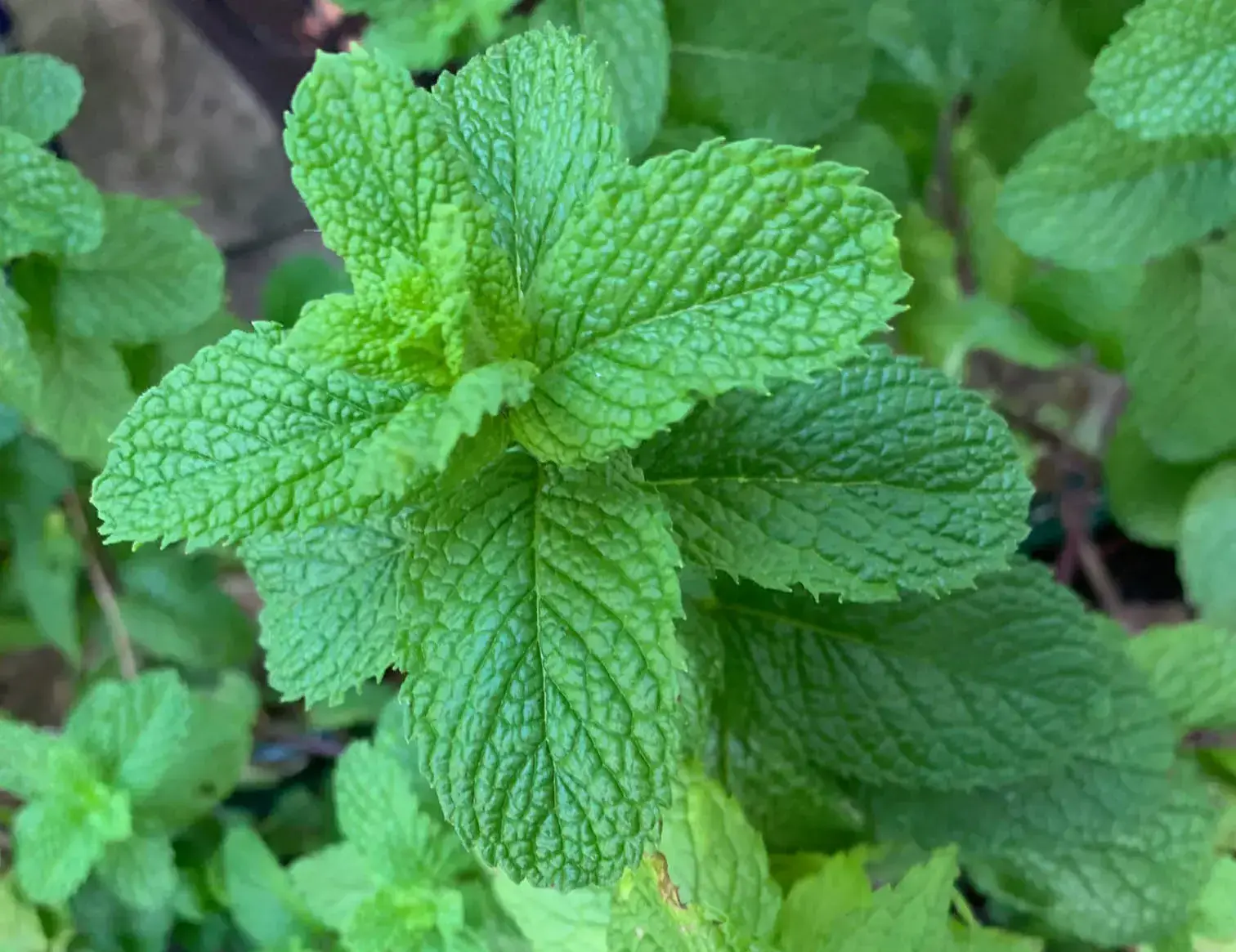
“Mint,” I said, thinking of the trough of healthy mint plants at my kitchen door.
The sun wanders across this part of the garden for about three to four hours every day satisfying the mint’s need for conditions in partial shade.
With a reputation for being an invasive spreader with underground runners known to monopolise its space, choking and crowding out the roots of plants growing near them, mint should be grown in its own container.
Or, you could insert a vertical root barrier in the soil beside the mint plant if you have a limited area for growing herbs and would like to plant others beside it.
Another idea is to drive some slates or plastic lawn edging vertically around them to contain their roots.
You’ll be grateful to have mint in the garden during the festive season.
Mint is the essential herb for complementing roast lamb in mint jelly, sauce or mint yoghurt sauce.
Chilled Mojitos enjoyed as a refreshment on a hot summer’s day (or anytime) have their main ingredient as mint.
Or simply add slices of lemon/cucumber and mint to the table’s drinking water which makes it more thirst quenching.
Sunlight is the lifeblood of herbs, especially as the part of the herb plant that we mostly need for culinary purposes is its leaves.
This means a certain amount of sunlight is essential for developing the green pigment in the leaves called chlorophyll, which absorbs light in order to manufacture food for the plant through the process of photosynthesis.
Too little sunlight will result in leaves that turn yellow-green instead of green.
Without sufficient sunlight the herbs become leggy, pale and weak and lose much of their flavour.
The soil needs sunlight too. It prevents it from becoming soggy which can encourage root rot and fungus gnats.
Rotating the pot the herb is planted in will serve its need for sunlight.
Other herbs with partial shade needs include parsley, cilantro, chives and dill.
Herbs like basil, thyme, rosemary and mint make their oils in sunlight so when there is a lack of it the herbs taste bland.
Choose a south-facing window if you plan to grow the herbs on a windowsill.
Parsley is used as a garnish and for flavouring savoury dishes.
Curly parsley has tightly packed curly leaves. Italian or flat leaf parsley has smoother leaves.
In the rose garden parsley helps to attract beneficial insects like ladybirds. They eat the aphids which feast on the tender growth of the rose plant.
Parsley makes an excellent pot plant. As it has a long taproot, choose a deep pot with good drainage holes at the bottom. Do add stones or bits of broken crockery to allow excess water to drain from the pot which should be 15 to 25cm wide.
Fill the pot with a good quality, moisture retentive potting mix. (Ordinary garden soil won’t do).
Keep the soil consistently moist but not waterlogged. Insert the first digit of your finger into the soil to ascertain whether it needs watering or not. It is recommended that every fortnight to a month that you water it with a half strength of liquid fertiliser such as Seagro.
What is the secret to ensure that parsley keeps on producing new leaves? Pick the outer, more mature stems at the base near the soil rather than just snipping off the individual leaves. This encourages new growth to develop from the centre.

Parsley is one of the herbs used to create a bouquet garni, which means ‘garnished bouquet’ in French. It is a traditional seasoning technique used to infuse (much like a tea bag) a dish with aromatic herbal flavouring while it is cooking.
Usual ingredients in bouquet garni include parsley, thyme and a bay leaf.
The herbs are gathered together using kitchen twine or held together wrapped in leek leaves, muslin or an unused coffee filter.
Rosemary, Sage, Tarragon, Basil, Savory may be added to the bouquet garni depending on the ingredients in the long-simmering dish (stocks, soups, casseroles and stews) and how you would like to enhance their flavour.
As the dish simmers the bouquet garni infuses it, deepening the flavour. The bouquet garni may be lifted out of the dish without leaving the leaves and loose stems in the dish before it is served.

Cilantro also develops a long taproot. Choose a container 20 to 25cm deep filled with a high quality organic potting mix.
Sow a small batch of seeds every fortnight to ensure you have a continuous supply of the herb.
Choose a spot which gets four to six hours morning sun to arrange the pots.
If the plant gets too hot it will go to seed and turn bitter. That the above herbs are grown in planters means it is easier to move the pot to a shadier spot when the temperatures become too hot.
Cilantro should be added at the end of the cooking process while parsley may be included at the beginning.
As with parsley, snip the outer leaves and stems first when the plant reaches about 15 to 20 cm in height.
Avoid excessive fertiliser with cilantro.
Another herb that can be grown in partial shade in pots is chives. It has a grasslike appearance with narrow, round, hollow leaves and is a member of the onion family.
It produces lavender coloured flowers.
Garlic chives produce white flower heads. They have flat leaves which have a garlic flavour and are most often used to flavour soft cheeses, soups and sauces. Or as a garnish.
You can grow the chives in pots that are 15cm deep with drainage holes and filled with fertile, compost-rich garden soil.
When the plants are 15cm tall they are ready for use in your recipes. Use a pair of scissors to cut them to about 2cm above the base.
To ensure repeated harvests through the season leave one-third of the plant intact.

Keep the soil consistently moist but not waterlogged.
Dill seeds should be planted in the ground where they are to grow as they do not transplant well.
I remember a favourite condiment to flavour the Saturday fried fish was a mixture of mustard and dill which once sat on the supermarket shelf with the chutneys and tomato sauce. Unfortunately, it is no longer available today.
Dill grows wild along the unkempt pavements in Nelson Mandela Bay. We often stopped to pick the umbels of small yellow flowers to use as fillers in our church flower arrangements.
The chopped foliage and stems of dill are used to flavour fish, chicken, salads and sauces. The seeds are aniseed-scented. When dried they are used to flavour pickles, sauces and vinegars.
Possibly a holiday project could be to source terracotta or matching/complementary pots to create a partial shade herb garden. The best site is near the kitchen door to make them easily accessible for culinary purposes.
To add height to the planting/grouping grow a bay leaf tree in a pot at the entrance to the front/kitchen door. The tree would also make a much appreciated gift for a gardener.