Surging demand and financial pressures test vital addiction services in the Eastern Cape
Social Impact Enterprise Award nominee | SANCA's Mabika puts families at the heart of recovery
The Border-Kei Chamber of Business Awards aim to recognise outstanding businesses and individuals for their contribution to the region’s economy. There are six categories of awards and over the last few weeks the Dispatch has been profiled the nominees in each category. Today is the final category.
3 min read
For SANCA Central Eastern Cape, completing a rehabilitation programme marks only the beginning of a person's recovery journey. Under the leadership of director Nokuthula Mabika, the organisation adopts a holistic, community-focused approach to addiction treatment, recognising that substance use disorders impact entire families, workplaces, and neighbourhoods.
Operating across the Eastern Cape, the non-profit blends inpatient care, outpatient services, and medically supervised detoxification with youth prevention and aftercare support. However, growing demand and financial hurdles highlight an urgent call for stronger multi-sector partnerships to ensure vital rehabilitation remains accessible to all.
SummaryOpen the quick read
SANCA Central Eastern Cape director Nokuthula Mabika emphasises that true recovery extends beyond completing rehab to rebuilding family relationships and community ties.
Between April 2025 and March 2026, the organisation assessed 285 people, delivering inpatient care to 121 and outpatient support to 141, whilst aftercare groups reached nearly 900 individuals.
Early intervention remains a priority, highlighted by the eight-module I CAN programme aimed at adolescents aged 13 to 18.
High community demand saw the facility accommodate 29 outreach invitations reaching over 1,000 people, though resource constraints forced the refusal of 12 others.
Mabika advocates for sustained multi-stakeholder investment and government support to prevent financial hardship from barring vulnerable individuals from quality addiction treatment.
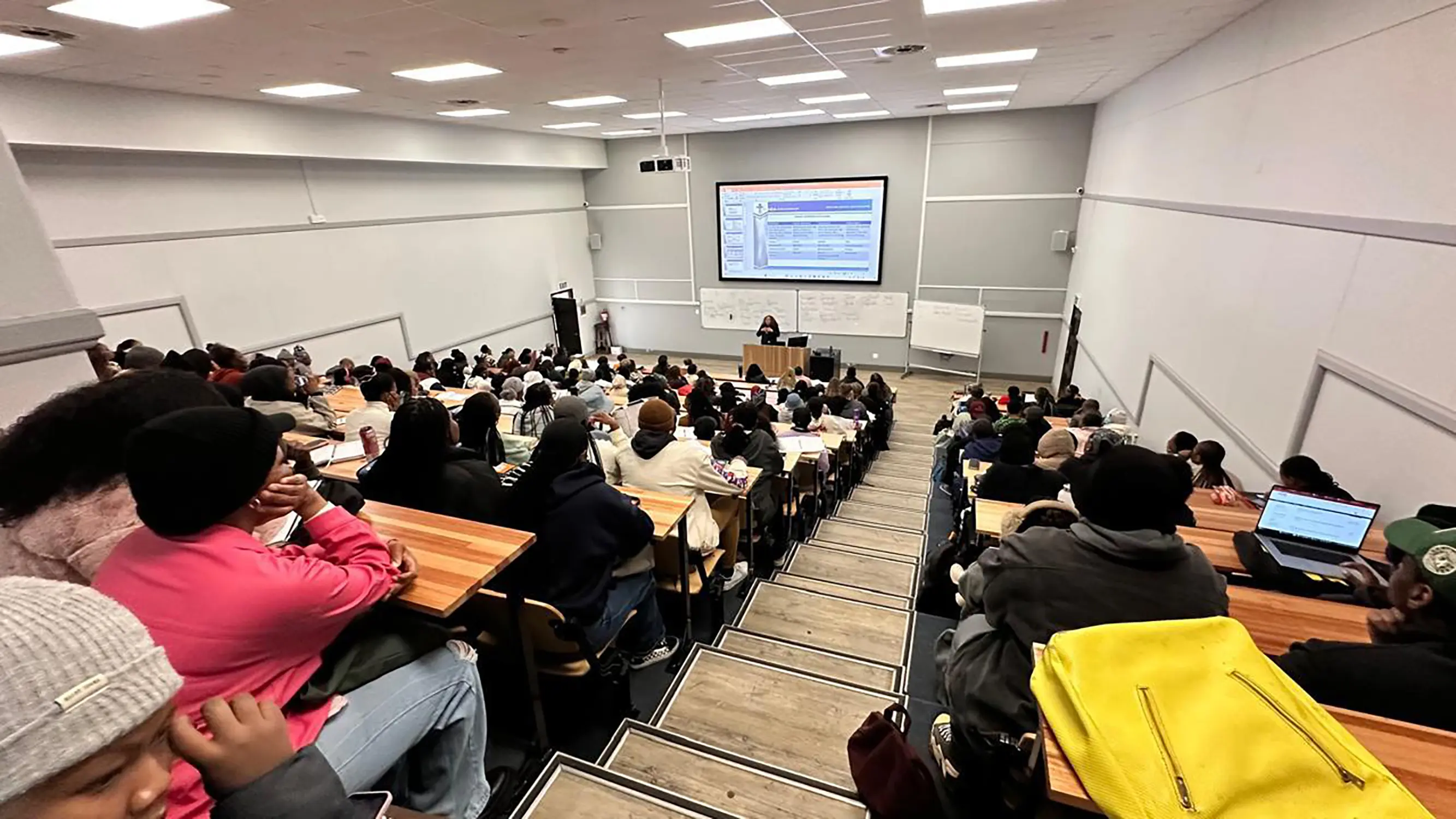
SANCA SANCA Central Eastern Cape representatives engage with third-year psychology students at Rhodes University during a guest lecture on substance use disorders.
Completing rehabilitation is only one measure of recovery at SANCA Central Eastern Cape.
Director Nokuthula Mabika said the organisation also looked at whether those they helped tried to rebuild relationships, take responsibility for their recovery and prepare to return to work or community life.
“What drew me to addiction care is the understanding that substance use disorders affect far more than the individual,” Mabika said.
"They affect families, children, workplaces and entire communities.”
Established in 1952, the East London-based organisation is part of the South African National Council on Alcoholism and Drug Dependence (SANCA), providing treatment, rehabilitation, prevention and aftercare across the Eastern Cape.
Mabika, 36, joined SANCA in 2019 and became director in July 2024.
A registered social worker with an honours qualification and specialist training in addiction treatment and prevention, she has also worked in crime prevention and youth development.
“My motivation comes from knowing that when we help one person recover, we can also contribute to restoring a family, strengthening a community and preventing further harm,” she said.
With 24 paid staff members, SANCA CEC provides inpatient rehabilitation, outpatient treatment and medically supported detoxification, with a doctor overseeing the detoxification programme and nursing care available around the clock.
Treatment begins with an assessment of a person's substance-use history, health, family circumstances and previous experiences of treatment.
“Our goal is to provide appropriate, person-centred support rather than assume that one intervention will work for everyone.”
The organisation reported in the year from April 2025 until March 2026 assessing 285 people, providing outpatient services to 141 and inpatient care to 121.
SANCA Central Eastern Cape director Nokuthula Mabika.
Its aftercare support groups reached a further reported 889 people.
But Mabika said completing a rehabilitation programme was not the only measure of success.
“People often need to rebuild trust, restore family relationships, develop healthy routines and regain confidence in their ability to participate in everyday life.”
With a patient's consent, relatives can attend education and support sessions to learn about substance-use disorders, improve communication and establish boundaries.
“Successful reintegration requires collaboration.
"Families, employers, healthcare providers, community organisations and the person in recovery all have a role to play,” she said.
SANCA CEC also works to prevent substance-use problems before they require more intensive treatment.
Its eight-module I CAN programme provides early intervention for adolescents aged 13 to 18, supported by parent workshops and educator engagement.
Workplace programmes address substance-use awareness and employee wellness.
Demand has also outstripped its resources.
In the same time period April 2025 to March 2026, it received 41 invitations from schools, communities, government departments and businesses, with the organisation accommodating 29, reaching 1,071 people.
The remaining 12 could not be accommodated because of capacity and resource constraints.
“This demonstrates both the demand for prevention services and the importance of investing in programmes that can be sustained and expanded,” Mabika said.
Affordability also prevents some people from accessing treatment.
“For some families, the challenge is not recognising that help is needed but finding an affordable service and the resources to sustain treatment and aftercare.”
SANCA CEC works with the department of social development to assist eligible indigent clients, while service income, government support, donations and grants contribute to operating costs.
“A nonprofit organisation cannot rely on goodwill alone to maintain a specialised rehabilitation service.
"We need consistent investment from the government, businesses, donors and other stakeholders to ensure that financial circumstances do not prevent vulnerable people from accessing the care they need.”
Mabika hopes to build stronger partnerships, expand prevention programmes and improve access to treatment and aftercare.
“Behind every admission is a person, a family and a community that needs support,” she said.
“As a social worker and addiction professional, I believe that people should not be defined by their struggles or their past.
"They should have an opportunity to recover, rebuild and participate meaningfully in society.”